

Motorola Solutions brings cloud access control data onshore
Tue, 15th Sep 2026 (Today)
Motorola Solutions has expanded its cloud access control platform to the Australian market, bolstering its locally hosted security offering as companies place greater emphasis on data sovereignty and the use of AI across physical security.
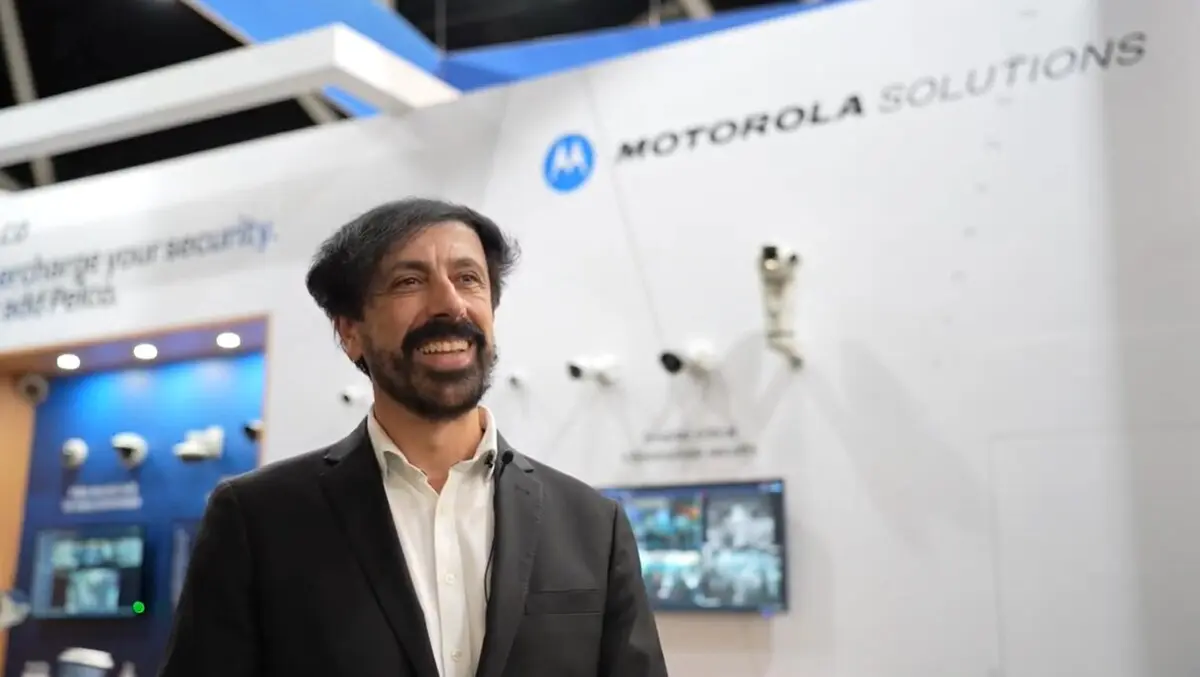
The company unveiled the local cloud instance at ASIAL 2026 in Sydney, bringing access control data residency into its existing Australian cloud security offering.
The launch provides Australian organisations with a fully integrated cloud security environment, while addressing requirements around where sensitive security data is stored.
Motorola Solutions has already offered a local instance of its cloud video security solution in Australia for several years, but the addition of cloud access control means customers can now bring the two capabilities together within a locally hosted environment.
Data sovereignty has emerged as a key consideration for organisations evaluating cloud-based security platforms, particularly among government agencies and larger enterprises.
Australian customers are increasingly focused not only on the security of their data, but also on where it is stored and how it is used, said Senior Sales Director Oceania at Motorola Solutions, Peter Krincevski.
"When you look at organisations like government agencies, large enterprises, they're very focused on data sovereignty," he said.
"There are key requirements, key internal requirements by those organisations to have that data remain in Australia."
The local deployment is also designed to address requirements associated with frameworks and standards governing information security and data handling.
Krincevski pointed to ISO 27001 and the Security of Critical Infrastructure Act (SOCI) as regulatory frameworks around storage and security requirements that are significant considerations for organisations.
The move comes as physical security technology increasingly shifts from standalone systems towards cloud-connected platforms capable of analysing video, access events and other information.
Motorola Solutions' cloud video security platform incorporates a range of AI-powered analytical capabilities, including appearance search, unusual motion detection and heat maps.
The platform can distinguish between people and objects, and allows operators to search for particular events or objects within video footage.
For example, if an object such as a shopping bag appears or disappears within a monitored environment, operators can use the system to identify the relevant moment in the footage rather than manually reviewing hours of video.
Unusual behaviour detection is becoming particularly important because it can help security teams identify activity that might warrant intervention before an incident escalates.
"If we have an environment like this where you don't expect running, then all of a sudden we see some running, that's going to be picked up by this unusual motion detection," he said.
An alert can be presented to a security operator, who then determines whether the activity requires a response from a security guard or other personnel.
The approach reflects a broader shift in the role of video security, with Motorola Solutions positioning cameras and associated analytics as sources of business intelligence rather than simply tools for recording incidents.
One prominent feature is 'focus of attention', designed to help security operators prioritise incidents rather than continuously monitor multiple camera feeds.
As companies increase the number of cameras in their security network, security operations centres can face a growing volume of video without a corresponding increase in staffing.
Krincevski said focus of attention could help reduce the resources required to monitor those environments by directing operators towards incidents requiring action.
"Having a feature like focus of attention can actually reduce the resource requirements for that control room because they're not looking at a sea of monitors," he said.
Instead, operators can focus on incidents occurring in real time and respond accordingly.
The cloud model also offers a way for organisations to reduce the upfront financial burden associated with implementing advanced security technology.
Moving from a traditional capital expenditure model to an operating expenditure model allows customers to pay a recurring fee rather than making a large upfront investment in an AI-enabled video security system.
This could make the technology more accessible to organisations that may otherwise be reluctant to commit significant capital to a new security platform.
Local hosting also has the benefit of reducing latency by keeping critical information within Australia, while potentially reducing some of the challenges associated with sending data to overseas infrastructure.
Despite the security industry's concerns about moving physical security systems into the cloud, attitudes among Australian customers have shifted significantly.
Previously in the Australian market, there was considerable discussion about whether organisations were ready to trust cloud-based security systems.
That hesitation has since diminished, with Krincevski saying even government agencies that previously expected to remain on-premises are now seeking more information about cloud solutions.
"The market is definitely embracing that next evolution of video security," he said.
Motorola Solutions is also seeking to connect its video security, access control and critical communications capabilities into a broader security ecosystem.
The company has a long history in critical communications and radio technology, while its expansion into video security and access control has allowed it to connect information from physical security systems with communications platforms.
This has created an ecosystem built around identifying, analysing, responding to and resolving incidents.
The company can, for example, push incidents identified through video security systems to radio users, creating a link between detection and response.
Motorola Solutions has expanded its presence in video security through acquisitions and product development as it builds this broader technology ecosystem.
The combination of critical communications, along with video security and access control, is a key differentiator in the marketplace.
The ultimate objective is to reduce the need for people to manually watch video and instead use AI and analytics to surface relevant information automatically.
"We want to make watching video obsolete," Krincevski said.
That shift is also changing the business case for physical security technology.
While security remains a core requirement, customers are now able to use cameras and analytics to address operational issues, workplace health and safety and retail shrinkage.
A retail environment, for example, can utilise camera-generated insights to monitor when customer traffic peaks and adjust staffing accordingly.
Analytics can identify that a store experiences its highest customer volumes between particular hours, providing an indication that additional staff should be allocated to checkout areas.
The same principle extends to access control.
Krincevski cited a customer that moved from traditional swipe cards to Motorola Solutions' Alta Access mobile credential technology. The organisation subsequently reduced the number of requests made to its security manager by employees who had forgotten or lost physical access cards.
Because credentials are stored on mobile devices, employees can use their phones instead of relying on physical cards.
The change effectively eliminated the daily burden associated with lost or forgotten access cards, allowing the security manager to spend more time on higher-value activities.