

Virtualplatform previews AI workflow engine for telcos
Wed, 2nd Sep 2026
Virtualplatform has previewed an AI-powered Workflow Engine for Australian telcos, internet service providers and managed service providers.
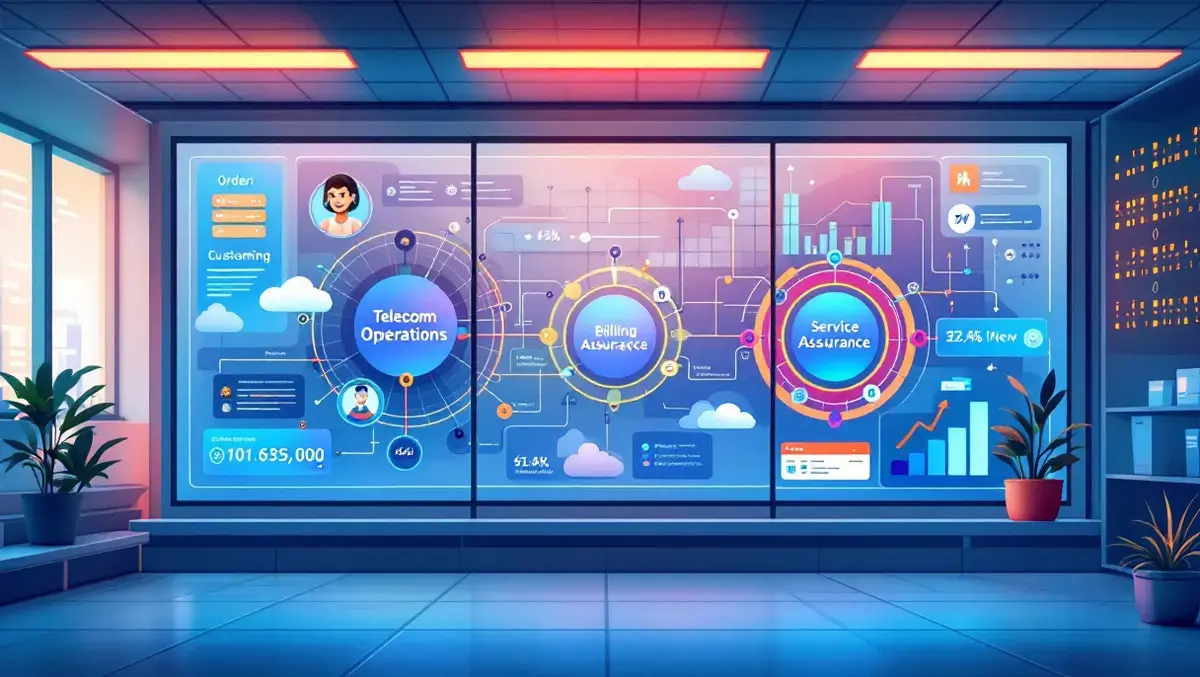
The software uses a visual no-code workflow canvas to help operators automate processes linking customers, staff, internal systems and external suppliers. It is designed to embed AI within operational workflows rather than offer it as a standalone chatbot.
Virtualplatform says AI models can be inserted at different points in a process to interpret information, classify requests, improve data quality, generate communications, recommend actions and trigger the next operational step. It says this could apply across ordering, provisioning, assurance, billing and support.
The launch also includes what it calls Vendor Bridge, a layer that normalises different supplier application programming interfaces behind a common interface. This is intended to let providers reuse the same workflows across multiple suppliers, even when the underlying APIs, data formats and transaction steps differ.
In practice, a process built for one NBN retail service provider could run through another supplier without the operator having to rebuild every linked process. The same approach could also support automatic vendor failover if a preferred supplier becomes unavailable or unsuitable for a transaction.
Stuart Wallis, Chief Technology Officer and Co-Founder of Virtualplatform, said embedding AI into day-to-day operations makes it more useful.
"AI becomes far more valuable when it is embedded directly into the business process," Wallis said. "The intelligence has the context and access needed to produce an actionable outcome - not just another answer in another window."
Supplier layer
Vendor management remains a persistent issue for telecoms providers, particularly those that rely on several upstream networks and wholesale partners. A change in supplier can trigger redevelopment across order management, service assurance, customer communications and billing systems.
Virtualplatform says Vendor Bridge is designed to remove that dependency by creating a standard interface once and reusing it across workflows, brands and customer environments. It argues this would make suppliers more interchangeable within the workflow layer.
"Vendor Bridge removes the supplier dependency from the business process," Wallis said. "Integrate a supplier once, normalise its capabilities and then reuse them across workflows, brands and customers."
"It means the provider's operation becomes vendor-swappable. Changing an upstream supplier no longer needs to mean rebuilding the business around it."
Virtualplatform outlined several practical uses for the system. One is invoice-to-order migration, where a customer moving provider uploads an existing telecoms invoice and AI extracts details such as the address, LOC ID, AVC ID, current service and plan information to prepare an order.
Another is plan migration, in which the workflow identifies an existing service, presents compatible replacement plans and guides the customer through a switch with less manual data entry. Virtualplatform also pointed to ticket classification and triage, where incoming requests can be sorted into billing, fault or provisioning categories and routed to the next diagnostic step.
The product is also intended to translate supplier error codes into plain language and suggest remedial actions. In support operations, it can condense diagnostics, supplier events and ticket histories into summaries for customers and first-line support teams.
Production use
Virtualplatform says the underlying workflow technology is already deployed in the live operating environment of a Brisbane-based telecommunications aggregator. The visual engine now being shown builds on that deployment rather than starting as a fresh prototype.
That appears intended to address a common market concern that many AI tools are demonstrated in narrow scenarios but have not been integrated into production telecoms operations. Virtualplatform says its approach combines workflow orchestration, supplier integration and AI decision-making in a single operating framework.
"This isn't a theoretical automation concept," Wallis said. "We're combining proven workflow architecture, normalised vendor access and embedded AI to deliver genuine operational leverage."
While APIs have long automated individual transactions, many telecoms providers still depend on spreadsheets, manual handovers and custom-coded processes across the wider customer lifecycle. That can leave operators facing fresh development work whenever they add a new supplier or launch a new product.
Virtualplatform says its system is intended to turn those activities into reusable workflows spanning qualification, ordering, provisioning, communications, approvals, assurance and billing. The company was founded in 2023 and focuses on software for telcos, ISPs, MSPs and network operators.
Wallis said the broader goal is to make AI part of the operational flow rather than a separate tool for staff to consult.
"The real opportunity for AI isn't another window for employees to watch," Wallis said. "It is intelligence embedded throughout an operation that can understand, decide and act."