

Microsoft backs Australian Government AI framework
Thu, 16th Jul 2026
Microsoft has backed the Australian Government's emerging approach to artificial intelligence policy following the Prime Minister's address on AI at the University of Sydney.
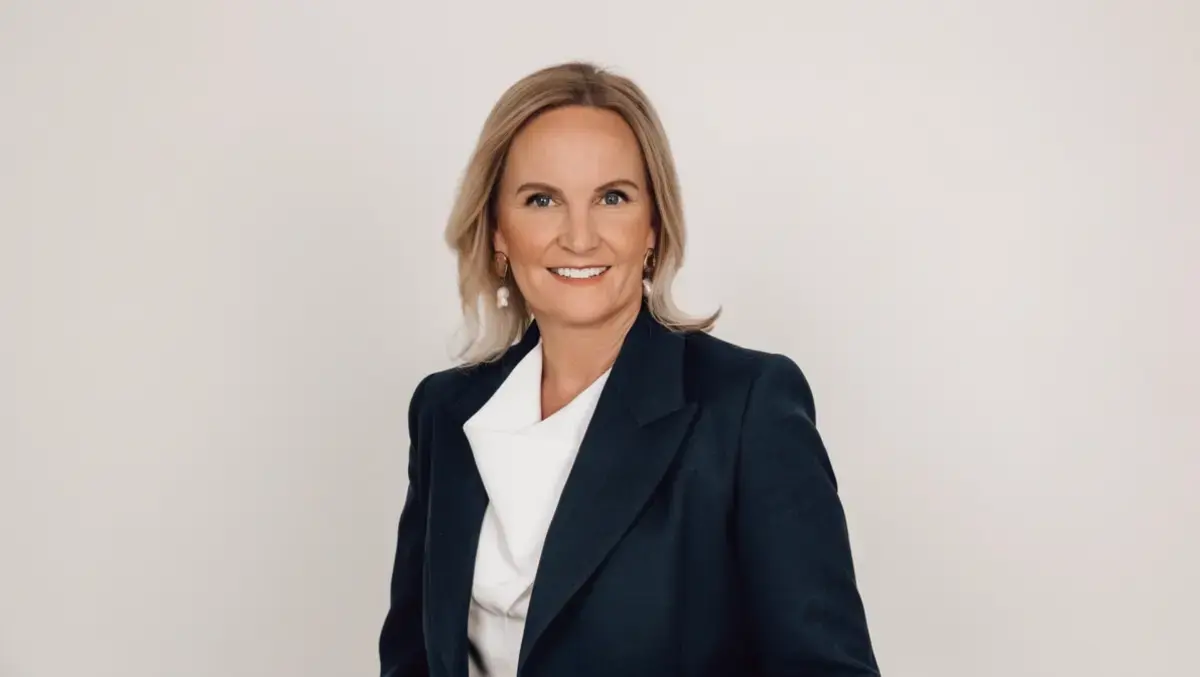
Jane Livesey, President, Microsoft Australia and New Zealand, said the company supported a nationally coordinated AI framework as Canberra sharpens its policy stance. She said central coordination would give businesses more certainty, build public trust and help Australia respond more quickly as AI systems evolve.
"The Prime Minister's address today at the University of Sydney was a clarion call for Australian leadership in the AI era. It sets out a confident direction for how we must calibrate national policy to ensure the benefits of this transformational technology are shared widely and equitably - an ambition Microsoft strongly supports," Livesey said.
The comments place one of the world's largest technology companies behind a stronger national policy framework as governments try to balance AI adoption, economic growth and safeguards. They also underline how closely large cloud and software providers are linking their Australian investment plans to policy certainty.
Livesey said a common framework should cover AI's impact across government, industry and the wider community. She said central oversight would give business leaders more confidence in decision-making while assuring Australians that standards would be applied consistently.
"We welcome the Government's sharpened focus for all who share responsibility in Australia's AI transformation. Realising the promise of this technology requires deep partnership across industry, technology, and government - all working together to keep AI safe, inclusive, and delivering for every Australian. The Prime Minister's plan gives us the shared foundation to do exactly that," Livesey said.
Investment plans
The intervention also highlights Microsoft's existing investment programme in Australia. In April, it announced plans to invest AUD $25 billion in new digital infrastructure in the country by the end of 2029, describing it as its largest investment in Australia to date.
That spending is focused on infrastructure including datacentres, which have become central to Australia's debate over AI expansion, electricity demand, water use and national resilience. Microsoft said those assets support cloud services used by businesses, public agencies and individuals, and form part of the country's broader digital and security infrastructure.
Livesey said the company had signed a memorandum of understanding with the Government tied to official expectations for datacentre and AI infrastructure developers. Those expectations include support for Australia's energy transition, responsible water use, and investment in skills and jobs.
Microsoft also pointed to its renewable energy arrangements in New South Wales and said it matched all of its global electricity consumption with renewable energy last year. It added that it had recently replenished more water globally than it withdrew from datacentre operations.
Workforce focus
Another central theme in Microsoft's response was AI's impact on the labour market. The company said it shared the Government's view that workers should remain at the centre of the transition and argued that AI should create jobs overall rather than eliminate them.
That position comes as employers, unions and policymakers debate how generative AI will change office work, professional services, education and public administration. For large technology suppliers, workforce training has become a key part of the policy debate as governments seek evidence that AI investment will translate into broad economic gains.
Microsoft said it had committed to helping three million Australians build AI skills by the end of 2028, calling it the largest AI skilling commitment made in the country. It also referred to a framework agreement signed earlier this year with the Australian Council of Trade Unions, which it said was intended to ensure workers are represented in discussions about AI adoption.
"Australia's rapid embrace of AI has been felt across every government portfolio, industry and community, and a single national framework is the right way to ensure all Australians benefit from the many opportunities this technology promises. Coordinating AI policy centrally will give business leaders greater certainty for faster decisions, give Australians confidence that standards are consistent and considered, and give our country the agility to keep pace as the technology evolves," Livesey said.
Media and copyright
Microsoft also used the moment to address another sensitive issue in AI policymaking: the treatment of journalism and creative work. It said Australian media and creative organisations should be protected for their work and suggested commercial agreements could help spread the financial benefits of AI more broadly.
It cited its recent agreement with Nine Entertainment, under which Microsoft Copilot can use journalism from Nine publications with attribution, excerpts directing readers to original articles, and payment to the publisher. Such deals are becoming increasingly important as publishers press AI companies over copyright, compensation and the use of trusted reporting in generative tools.
For the Government, Microsoft's support adds weight to the case for a national framework linking regulation, infrastructure, labour policy and intellectual property. For Microsoft, the message is also clear: long-term investment in datacentres, skills and AI services goes hand in hand with a push for clearer national rules.
"When people trust that AI is safe and well-governed, they adopt it with confidence - in turn, driving productivity and growth. A coordinated national framework is how we scale for systems-wide impact," Livesey said.