

Fujitsu tests quantum software on neutral-atom hardware
Wed, 9th Sep 2026
Fujitsu has begun testing its quantum computing architecture and software on neutral-atom quantum hardware with Japanese startup Yaqumo, extending its research beyond superconducting and diamond-spin systems.
The companies are combining Fujitsu's STAR architecture and Open Quantum Toolchain for OPerators and Users software with neutral-atom machines being developed by Yaqumo. They began theoretical work in April and moved to tests on an actual machine in August.
The project focuses on whether STAR, originally developed mainly for superconducting quantum computers, can work effectively on a different hardware model. Neutral-atom systems differ from superconducting systems in offering easier all-to-all connectivity between qubits, which can change how computations are organised and how error correction is handled.
The hardware tests are intended to assess compatibility that cannot be confirmed through theory alone. Fujitsu is also examining whether neutral-atom systems could support practical quantum computation with fewer qubits by taking advantage of that connectivity.
The software work is also significant. Because commands for neutral-atom systems differ from those used in superconducting machines, the companies are adapting command conversion, job management, device monitoring and calibration functions for a neutral-atom control system.
If successful, external users would be able to access neutral-atom quantum computers through the cloud using the same software framework Fujitsu has been building for other quantum systems. The longer-term aim is a platform that supports multiple types of quantum computers through a unified interface.
Broader strategy
The move is part of Fujitsu's wider multi-hardware approach as quantum computing developers pursue different routes to practical machines. The company has been working across superconducting hardware, software and fault-tolerant computing research, and recently disclosed a diamond-spin quantum computer prototype that integrates tin-vacancy centres rather than nitrogen-vacancy centres.
In superconducting quantum computing, Fujitsu has also been working with RIKEN and has developed a 256-qubit superconducting quantum computer. It has also begun development of a superconducting system with more than 10,000 qubits.
Yaqumo is developing quantum computer hardware based on ytterbium neutral atoms. The startup is targeting a system with more than several hundred qubits and quantum error correction.
The collaboration reflects a broader pattern in the sector, with hardware developers testing several approaches in parallel rather than betting on a single design. Neutral-atom systems have drawn attention for their scalability and coherence characteristics, while superconducting systems remain one of the best-established approaches in current quantum computing research.
For Fujitsu, the tests also help position its software and architecture work across more than one hardware type. That matters because one of the industry's unresolved questions is whether users will eventually operate different quantum systems through a common software layer rather than distinct tools built around each machine type.
Hardware validation
The STAR architecture, short for Space-Time efficient Analogue Rotation quantum computing architecture, is designed to reduce the number of qubits required for arbitrary angle phase rotation, a key operation in quantum computing. Its usefulness, however, depends heavily on the type of machine on which it runs.
That makes real-hardware validation important. Simulations and theoretical studies can suggest where an architecture may work, but they cannot fully capture the constraints and behaviour of physical quantum devices.
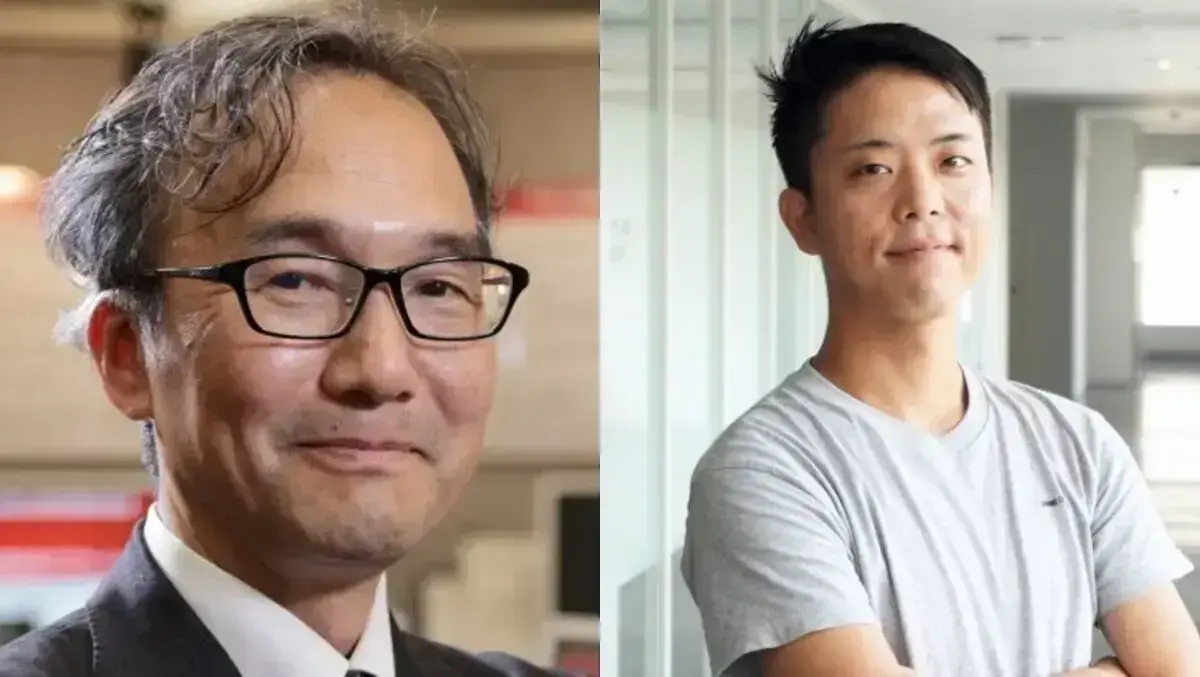
"We believe that Fujitsu's expertise in architecture design and cloud infrastructure, accumulated through its work on superconducting and diamond spin quantum computing, will strongly support our research and development of neutral-atom quantum computers. Through demonstrations involving connectivity with Open Quantum Toolchain for OPerators and USers and other Early-FTQC era technologies such as the STAR architecture, we aim to accumulate technical expertise that further unlocks the potential of neutral-atom quantum computing. This joint research will steadily advance our efforts toward realizing FTQC," said Kazuhiro Nakashoji, Chief Executive Officer of Yaqumo, commenting on the work,
Fujitsu's quantum research unit described the work as part of a push to align advances in hardware with the software and architecture needed to make systems usable. Both strands need to progress together if quantum computing is to move toward practical deployment.
"For the practical application of quantum computing, it is crucial to advance research and development on both innovative hardware technologies and architectural and software technologies that maximize their potential. We have high expectations that verifying the compatibility of Yaqumo's neutral-atom quantum computers with the STAR architecture and Open Quantum Toolchain for OPerators and USers through testing on actual hardware will lead to the establishment of efficient quantum computing methods and enhanced access and operating environments. Through this joint research, we aim to acquire new insights leveraging the characteristics of neutral-atom quantum computers and contribute to the development of quantum computing technologies for the FTQC and Early-FTQC eras," said Shintaro Sato, Fellow and Head of Quantum Labouratory at Fujitsu Research, Fujitsu.