Cyber resilience stories
Verified supplier checks could help governments cut breach risks and avoid service disruptions as agencies rely on thousands of contractors.
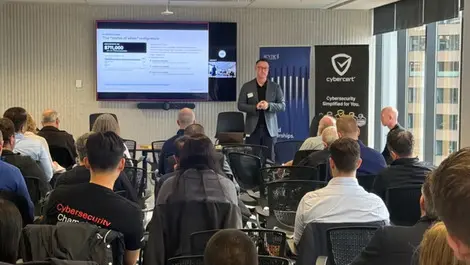
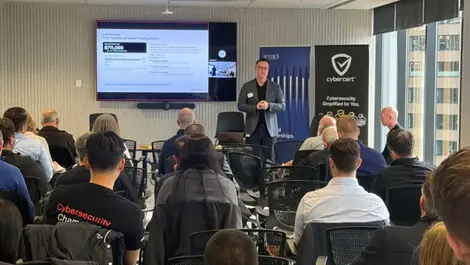
Government agencies could face more cyber risk from suppliers after Scyne's summit tour urged verified security checks for smaller vendors.
A basic security upgrade could cut projected annual losses from AI-driven cyber attacks by AUD $24 billion, the research says.
Recognition of service providers underscores the growing reliance on outsourced cyber advice as smaller firms seek stronger resilience without in-house teams.
Boards are being pushed to set clear controls as AI decisions spread beyond cyber teams and into daily work, raising governance and outage risks.
Boards are being pushed to treat recoverability as a frontline cyber issue, as AI lets attackers move faster and widen attacks.
The acquisition gives 11:11 Systems more enterprise accounts as Broadcom narrows VMware partners, but no financial terms were disclosed.
Businesses face rising disruption unless seven basic cyber controls are properly integrated, tested and owned across identity, recovery and supplier access.
The accreditation gives government and regulated buyers independent assurance that the VSP One Block platform has met recognised security requirements.
Tighter EU reporting duties are pushing open source vendors to harden supply chains, prompting four firms to join OpenSSF.
Most European firms are unprepared for AI-enabled attacks, as 56% of cybersecurity teams say they are understaffed and 55% underfunded.
Organisations are now prioritising AI over replacing old systems, with Kyndryl finding 98% of respondents have delayed modernisation and suffered setbacks.
Enterprises across Australia and New Zealand will gain a new option for automating IT operations as Netpoleon expands its portfolio with BMC Helix.
Early pilots suggest buildings could cut needless alerts by up to 90% and trim energy use by as much as 10% with the new system.
The pact gives public institutions and critical infrastructure operators in Côte d'Ivoire access to locally run security operations as cyber risk rises.
Enterprise leaders are under pressure to prove cyber spend cuts risk as 5Tattva reports stronger demand for resilience testing and threat intelligence.
CIOs are facing growing pressure to strengthen defences without adding cost or complexity as cloud, hybrid work and AI widen security risks.
The move is aimed at helping Italian startups win customers across Singapore and Southeast Asia as cyber threats escalate in the region.
The hire gives the UK cybersecurity provider a dedicated operator as it pushes to expand services and serve more than 150 organisations.
Rising digital and AI demand helped the Leeds consultancy expand by a third in 2026, after a nine-hire August recruitment drive.