

Seeing Machines launches physical AI platform for robots
Tue, 18th Aug 2026
Seeing Machines has launched a Physical AI Platform for humanoid robotics and industrial automation, extending the Australian company's work in human-centred artificial intelligence beyond automotive safety.
The Canberra-founded business says the platform is designed to help robots interpret people, behaviour and the surrounding environment, allowing them to operate alongside humans in workplaces and other real-world settings.
Seeing Machines is best known for driver and occupant monitoring technology used in the automotive sector. Its systems are deployed in more than eight million vehicles globally, tracking human attention and behaviour to help identify risk.
The company is now applying that expertise to robotics as manufacturers and other industries test machines in settings less controlled than research laboratories. The aim is to improve how robots respond to human movement, spatial relationships and changing conditions around them.
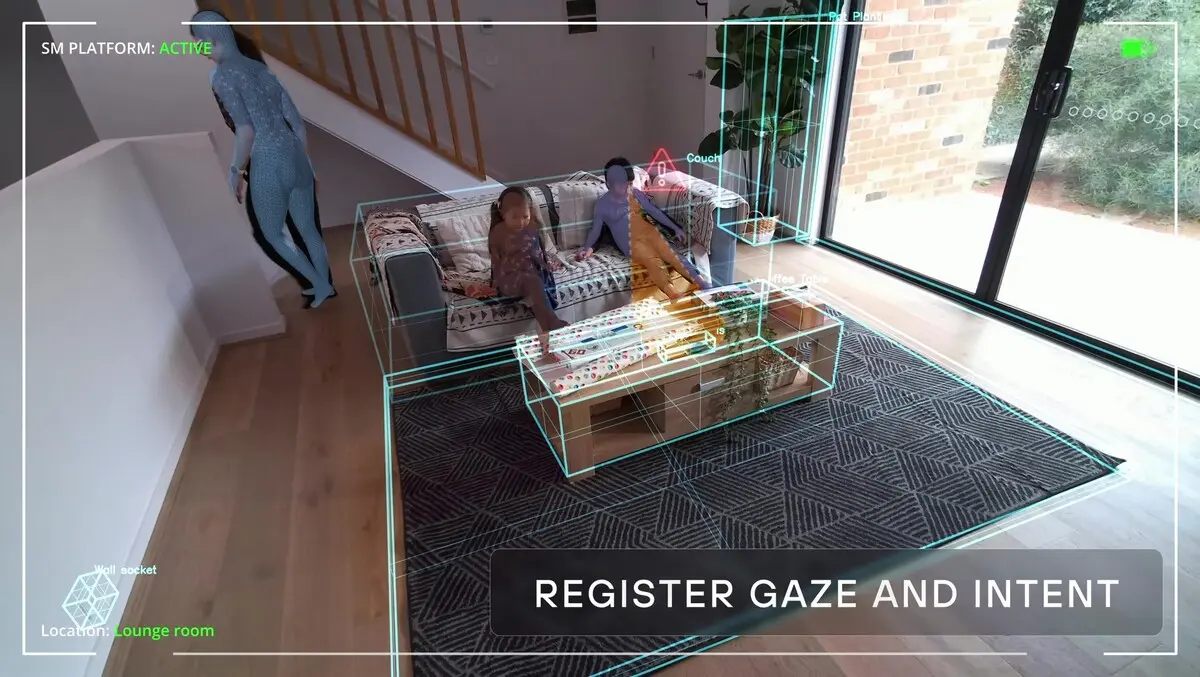
The platform creates a three-dimensional perception map of people, objects and the wider environment. The company says this is intended to move beyond simple object recognition by giving robots a broader view of a scene and the relationships within it.
That places Seeing Machines in a growing field focused on making robots safer and more practical in shared environments. Interest in humanoid robotics has risen as companies explore their use in factories, logistics operations, healthcare facilities, aged care settings, mines and warehouses.
Paul McGlone, Chief Executive Officer of Seeing Machines, linked the launch to the company's longer-term work on human-machine interaction.
"For more than two decades, we've been teaching machines to understand people," McGlone said.
He said the same approach is now being applied to robotics.
"Our technology is already protecting millions of drivers around the world by enabling vehicles to better understand human behaviour and respond to risk in real time. With the launch of our Physical AI Platform we are extending that capability into robotics, enabling machines to interact with people safely, naturally and intuitively.
"As robots begin moving beyond research labs and into factories, workplaces, hospitals, homes and public spaces, understanding people and the environment they're in becomes just as important as understanding the task they're performing. We believe our Human-Centred AI design philosophy will extend into a foundational capability for the next generation of robotics," McGlone said.
Broader push
Founded in 2000, Seeing Machines has built its business around computer vision systems that assess human attention, behaviour and cognitive state. In addition to automotive applications, it has expanded into commercial transport, aviation, robotics and industrial automation.
The company describes its approach as interpreting people, objects and the surrounding environment as a unified scene rather than analysing isolated elements. In practice, that means a robot would assess not only where a person is standing, but also how they are moving, what may happen next and what risks could emerge in a shared space.
Such issues are central to wider industry debates over robotic safety. As machines are introduced into environments occupied by workers, patients, residents or the public, developers face pressure to show that systems can respond appropriately to unpredictable human behaviour.
That challenge is particularly acute for humanoid robots, which are often intended to work in spaces originally built for people rather than fixed industrial machines. Warehouses, hospitals and care settings present changing layouts, mixed traffic and human interactions that are harder to manage than repetitive tasks inside fenced production lines.
Industry uses
Seeing Machines says the platform could be used across manufacturing, logistics, healthcare, aged care, warehousing, mining and other industrial settings. Those sectors are increasingly examining robots as labour shortages, safety demands and operational complexity reshape how work is organised.
For Seeing Machines, the launch also signals an effort to widen the commercial reach of technology first proven in transport safety. By moving into robotics and automation, the company is positioning its human-sensing expertise for a market where safe interaction between machines and people is likely to become a core requirement.