

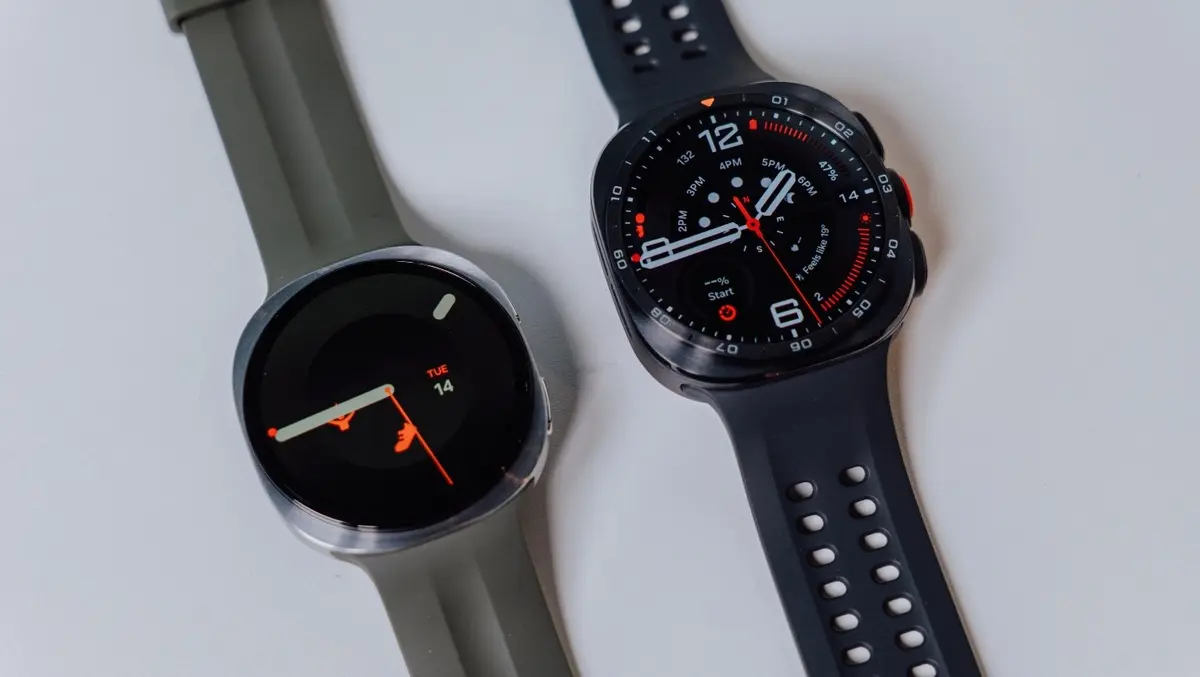
Samsung launches health-focused Watch9 & Ultra2 in Australia
Fri, 21st Aug 2026
Samsung has launched the Galaxy Watch9 and Galaxy Watch Ultra2 in Australia, as research commissioned by the company found 53% of Australian women would consider buying a smartwatch that acts as a personal health coach.
Samsung is targeting consumers who want to track sleep, fitness and overall wellbeing. Its sales data suggests women already make up a large share of buyers for smaller-format watches, accounting for 73% of Galaxy Watch9 40mm users in Australia.
The figures point to a broader shift in the local wearables market, where health monitoring and daily routine management are becoming primary reasons to buy a smartwatch rather than secondary features. Samsung's survey, conducted by PureProfile among 1,017 Australians, found 66% of Australian women either already own or plan to buy a wearable device to track indicators such as heart rate and sleep, while also using it for messaging and safety.
Sleep emerged as a key area of interest. The research found 55% of Australian women named improving sleep as a top health goal, while 30% said tracking tools such as bedtime guidance and sleep apnoea warnings were among the most important factors when choosing a wearable device.
The launch adds to competition in a market where smartwatch makers are trying to link hardware sales more closely to health and lifestyle use cases. Samsung positions the Galaxy Watch9 as an everyday device and the Galaxy Watch Ultra2 as a more rugged option for users with demanding fitness goals and outdoor interests, with both designed to give more insight into activity, recovery and sleep patterns.
Health focus
Samsung linked demand for wearables to a broader change in how Australians view health, citing findings from Nature's State of the Nation Report showing 86% of Australians believe health extends beyond diet and exercise to include physical and mental wellbeing.
That framing matters because smartwatch makers are increasingly trying to move beyond step counting and exercise logging. Devices now compete on how well they fit into broader habits around sleep, recovery, stress and goal setting, while still serving as everyday communications tools.
Samsung says the Galaxy Watch9 combines comfort, battery improvements and health tracking features to help users better understand sleep, activity and recovery. The Galaxy Watch Ultra2 adds sports tracking and a more rugged design for users with tougher training schedules and outdoor interests.
Neither device is being presented simply as a fashion accessory. Instead, the launch reflects how manufacturers are trying to justify regular upgrade cycles through health-related software features and data-driven feedback, even as consumers become more selective about connected devices.
Female buyers
Samsung's data on female users of the Galaxy Watch9 40mm offers a more specific indication of who is buying into that proposition. A 73% share among women for that model suggests smaller smartwatch formats paired with wellbeing messaging are resonating with a distinct customer segment in Australia.
That trend could shape how Samsung positions the range in retail and marketing, especially as the survey suggests many women want devices that do more than record activity. The appeal appears to lie as much in guidance and motivation as in measurement.
Kylie Mason, Head of Wearables, Mobile eXperience at Samsung Electronics Australia, said: "Australian women are embracing a more holistic approach to their wellbeing, with growing interest in technology that can help support everything from sleep and movement to long-term health habits. It's no surprise that 53% of Australian women would consider investing in a smartwatch that acts as a personal health coach, and that's exactly what we've built into the Galaxy Watch9 and Watch Ultra2. Whether it's better understanding sleep patterns, staying active or tracking progress towards personal goals, wearable technology helps Australians take a more proactive role in their wellbeing."
The market opportunity is not limited to women, but Samsung's research and sales figures show they are a significant part of current and prospective demand. In a category where annual hardware changes can be modest, stronger interest from a clearly defined customer base is an important commercial signal.
For Samsung, the challenge will be turning interest in health-focused wearables into sustained sales in a market crowded with rivals offering similar tracking features. Its research suggests there is room to do so, with 66% of Australian women saying they already own or plan to buy a wearable device.