

Hands-on review: OPPO Find X10 Pro Max gets serious
Wed, 11th Nov 2026 (Today)
OPPO's Find X10 Pro Max pairs three 200MP cameras with a bright display and capable hardware, but its high price needs careful consideration.
Camera ambitions
Photography is the OPPO Find X10 Pro Max's strongest selling point. Three 200MP rear cameras cover broad landscapes and tighter portraits. Restrained processing and capable secondary cameras make the system useful beyond its headline resolution.
In New Zealand, the Pro Max costs NZD $3,499 with 12GB of RAM and 512GB of storage. At that price, its cameras need support from strong performance, a good screen and dependable battery life.
Solid construction
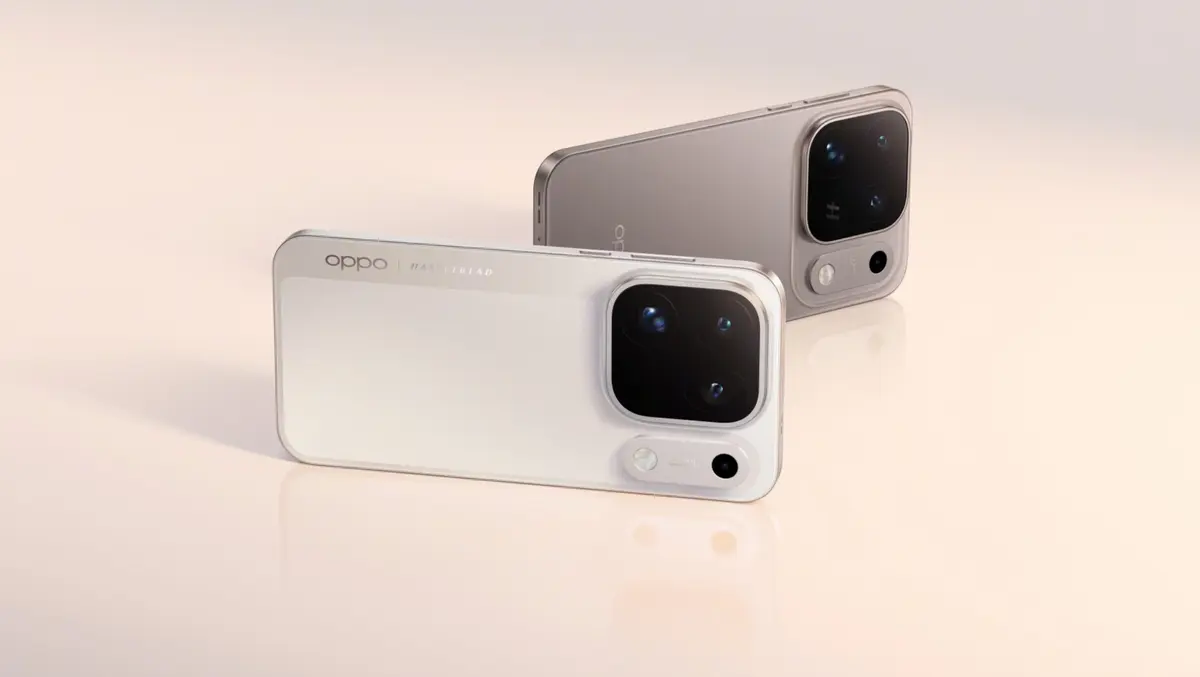
Flat aluminium sides and glass panels give the handset a familiar flagship appearance. A large rear camera housing dominates the design. Luna White has a two-tone finish, while Titanium Grey is more subdued.
The 6.78-inch screen makes this a substantial phone, better suited to two-handed use when composing photographs or editing footage. Buyers moving from a smaller handset should consider the adjustment.
IP66, IP68 and IP69 ratings provide dust and water resistance. These offer protection against everyday exposure, but should not encourage unnecessary risks.
Bright display
The LTPO OLED panel is a strength. Narrow, symmetrical borders leave ample space for photographs, video and reading. Broad colour coverage complements the imaging hardware.
The advertised 144Hz refresh rate is reserved for supported games. Everyday use relies on lower adaptive refresh rates, so applications will not all run at 144Hz.
The quoted peak brightness of 3,600 nits applies under particular conditions. It does not describe sustained brightness across the entire screen. The panel can also dim to 1 nit for reading in dark surroundings.
Photo quality
The rear system combines 200MP main, ultra-wide and telephoto cameras. An f/1.5 aperture serves the main camera. The telephoto offers approximately 3x optical magnification and focuses close enough for detailed shots of small subjects.
Consistency is the main benefit. Switching to a wider view avoids the pronounced loss of detail associated with more modest secondary cameras. The ultra-wide is useful for landscapes and interiors, although its expansive view can introduce noticeable distortion.
Processing generally preserves colour and texture without the heavy sharpening that can make foliage and fine surfaces look artificial. Hasselblad Master mode reduces processing further.
Automatic mode can still exaggerate a scene. Sharpening is sometimes apparent, and night skies can look brighter than they should. Retaining detail does not always produce a faithful image.
The default 26MP output is sensible for everyday use. High-resolution modes offer 50MP or 200MP capture on supported cameras. These produce larger files, so maximum resolution is best reserved for photographs that need it.
Longer reach
The optional Hasselblad teleconverter extends the telephoto camera to roughly 10x optical reach. It costs NZD $999, bringing the combined purchase to NZD $4,498.
The extra reach comes with handling compromises. The mount obstructs the other rear cameras, making it less convenient to switch between shooting styles.
The accessory also requires a dedicated shooting mode. It cannot use Master mode or Pro Video, limiting photographers who want consistent settings and processing throughout a shoot.
It makes most sense for deliberate long-distance photography. The cost is harder to justify for occasional holiday snapshots.
Video tools
All rear cameras support 4K recording at 60 frames per second. Supported cameras also offer 4K at 120fps and 8K at 30fps. Dolby Vision HDR and O-Log2 provide further capture and colour-grading options for experienced users.
Open Gate recording captures more of the sensor area, leaving room to crop footage into different formats, including vertical clips.
Some headline features have restrictions. OPPO's claimed 17-stop dynamic range applies to the main camera at 1x in standard Video mode. It is unavailable in Pro mode, 4K 120fps or 8K 30fps recording.
Video autofocus can be unsettled, while standard processing can lift shadows more than some users prefer.
Daily performance
MediaTek's Dimensity 9600 Pro handles everyday navigation, demanding applications and high-resolution photo editing comfortably. It gives the camera software enough processing power while keeping routine tasks responsive.
ColourOS 17, based on Android 17, offers extensive personalisation, a fluid interface and AI tools. Its translucent panels and quick settings can look busy.
The programmable Snap Key provides access to selected functions. Its value depends on whether those shortcuts suit the owner's habits.
AI editing and organisational tools broaden the software's capabilities. They remain secondary to responsive performance and the camera system.
Battery differences
The New Zealand handset has a 7,150mAh silicon-carbon battery. Some overseas versions have an 8,000mAh battery, so regional specifications matter.
Two-day endurance reported for the larger version should not be assumed for the New Zealand model. Intensive filming, gaming and screen brightness also affect runtime.
Charging supports 80W wired and 50W wireless operation with compatible equipment. The phone lacks built-in magnetic attachment for Qi2 accessories, so magnetic mounting requires a suitable case.
Buying decision
The Find X10 Pro Max is most appealing to buyers who regularly use several focal lengths and want greater control over their photographs. Its capable ultra-wide camera strengthens that appeal.
The standard Find X10 costs NZD $2,799, saving NZD $700. It retains 200MP main and telephoto cameras. Buyers willing to accept a smaller screen and lower-resolution ultra-wide have a serious alternative.
The Pro Max combines versatile imaging tools with flagship essentials. Its price is easiest to justify for those who use its photographic advantages frequently. Less demanding owners should give the cheaper model close consideration.