

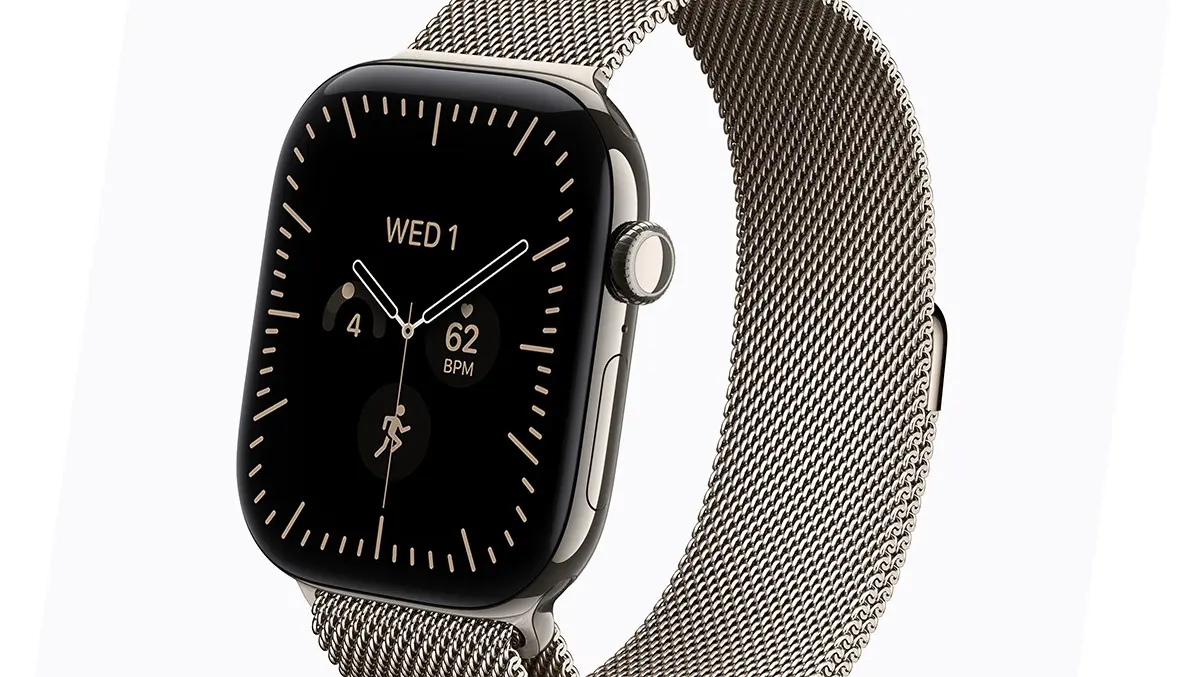

Apple's latest mainstream smartwatch puts its biggest changes beneath the screen. The Series 12 introduces redesigned heart sensors, more frequent health measurements and a readiness score. Faster charging also promises to make overnight wear easier to manage.
The 46mm GPS + Cellular model in Dark Bronze aluminium with an Olive Sport Band costs AUD $889 / NZD $1,049. The larger display and mobile connectivity put it above the range's AUD $649 / NZD $849 starting price.
Its strongest argument is the combination of everyday convenience and more useful health information. The limitations remain familiar: regular charging, iPhone dependence and features still unavailable at the time of writing.
Familiar shape
The Series 12 retains Apple's rounded rectangular case, Digital Crown and side button. Anyone upgrading from a recent Apple Watch will recognise the layout.
Dark Bronze gives the aluminium case a warmer appearance than black or space grey. The Olive Sport Band complements it, creating a restrained alternative to brighter finishes.
The case measures 9.7mm thick. The 46mm aluminium cellular model weighs 38.6g without the strap, substantially less than the equivalent titanium or ceramic versions.
The larger screen provides more room for text and workout information, but the case occupies more wrist space. Buyers with smaller wrists should try both sizes.
This configuration includes the M/L Sport Band. Fit matters because consistent sensor contact depends on a secure strap. A loose watch can compromise measurements; overtightening can make overnight wear uncomfortable.
Clear display
The 46mm screen has a resolution of 416 × 496 pixels. Its always-on OLED panel reaches a stated peak brightness of 2,000 nits and dims to one nit.
Those specifications balance outdoor visibility with discreet use in darker surroundings. The always-on display keeps the time visible without a deliberate wrist movement.
The screen remains a strength, although its familiar specifications offer little reason to upgrade from a recent model.
Aluminium versions now use Ceramic Shield 2 instead of Ion-X glass. Apple claims it is 60 per cent tougher than the previous material. That is a manufacturer claim, not a guarantee against damage.
The more expensive titanium and ceramic versions retain sapphire front crystals, which Apple describes as more scratch-resistant.
Better sensing
The redesigned Health Sensing System is the main hardware upgrade. Larger green LEDs, rearranged photodiodes and revised electrodes work with the S11 chip to collect more frequent readings.
Background heart-rate measurements now occur every five seconds. Previous models generally sampled at much longer intervals outside workouts. A watch-face complication makes the latest reading easier to check.
This matters beyond formal exercise. Everyday activities can raise heart rate without triggering a workout session. More frequent sampling provides a fuller record of those changes.
Heart-rate variability, or HRV, receives similar attention. The watch can measure it as often as every five minutes while the wearer is resting.
Recovery HRV informs assessments of recovery and daily condition. A separate overall HRV measurement remains available for broader trends. The practical benefit is easier access to information that previously required more digging.
More frequent sampling does not make every measurement infallible. Fit, movement and skin contact still matter. Apple's claim of class-leading accuracy also rests on its own comparative study.
Recovery guidance
Readiness is the most useful application of the new sensing hardware. It combines recent activity, training load, sleep and vital signs into a score from zero to ten.
Four recommendations accompany the number: Recover, Pace Yourself, Ready and Go For It. The app identifies which factors have raised or lowered the score.
That explanation matters more than the number alone. A score has limited value without showing whether sleep, exertion or unusual vital signs influenced it.
Readiness updates as new information arrives. A workout or nap can therefore change the assessment during the day.
It requires patience, however. Scores need around a week of qualifying overnight data before they become available.
The feature provides a useful counterweight to Activity rings. While the rings encourage movement, readiness brings recovery into the picture. Its recommendations should still be weighed against how the wearer feels.
Everyday fitness
The Series 12 tracks running, cycling, swimming and numerous other activities. Built-in GPS records outdoor sessions without an iPhone alongside it.
A revised pedometer aims to improve step counting when arm movement is restricted, such as when pushing a pushchair or carrying something.
The new Steps complication is a modest but welcome addition. Checking progress no longer requires opening an app or installing a third-party alternative.
Water resistance is rated to 50 metres, making the watch suitable for swimming. The rating does not mean it is approved for diving to that depth.
Established health features include ECG recordings, heart-rate alerts and sleep apnoea notifications, subject to eligibility and regional availability. These can flag information worth discussing with a clinician. They do not replace medical assessment.
Phone freedom
Cellular connectivity is the main reason to choose this configuration. With a supported mobile plan, the watch can handle calls, messages and music streaming while the iPhone stays elsewhere.
That is useful for runs, short errands and other occasions when carrying a phone is inconvenient. Its value is less convincing if the phone usually remains within reach.
The purchase premium is only part of the cost. A carrier may charge separately for watch connectivity.
Standard setup and use still require an iPhone. The Series 12 supports iPhone 11 or later, including the second-generation iPhone SE, running iOS 27 or later. Apple Intelligence features have stricter requirements.
Charging routine
Apple rates normal battery life at up to 24 hours, or 38 hours in Low Power Mode. Outdoor workout tracking is rated for up to ten hours, an improvement over the previous generation.
The normal-use figure remains unchanged. Anyone seeking several days between charges will need to look elsewhere.
Faster charging is the more practical improvement. Apple claims 15 minutes can provide up to 12 hours of normal use. Five minutes should supply enough power for ten hours of sleep tracking.
These estimates suggest brief charging sessions could fit more easily around morning or bedtime routines. They remain conditional figures.
Endurance and charging results vary considerably with usage and conditions. Allowing extra charging time is sensible before travelling or recording a long workout.
Unfinished features
Audio Intelligence gives the watch's microphone another role. Sound Recognition can alert users to important noises, including alarms and doorbells. Faster Shazam recognition brings music identification into the Smart Stack.
Live Rewind and Siri Recap are more ambitious. Live Rewind is designed to display text covering the previous 15 seconds of conversation. Siri Recap will produce brief conversation summaries.
Both are scheduled to arrive in beta later in 2026. They should carry little weight in a purchase decision until their reliability and usefulness can be assessed.
The features require users to opt in. Apple describes hardware isolation for audio processing, alongside controls over when and where summaries operate.
Those protections address data handling. They do not automatically resolve the social awkwardness of processing conversations involving other people.
Buying decision
The Series 12 makes its strongest case through improved health sensing and clearer recovery guidance. These changes extend its usefulness beyond notifications and exercise targets.
Dark Bronze and Olive give the familiar design an appealing finish. The 46mm screen also suits buyers who prioritise readability.
At AUD $889 / NZD $1,049, cellular connectivity needs to earn its place. Buyers who rarely leave their phone behind can spend less on the GPS version.
Owners of much older Apple Watches have more reason to upgrade. Recent-model owners face a narrower decision centred on readiness and more frequent sensing.
The Series 12 is a very capable everyday smartwatch with meaningful health improvements. Its appeal depends on accepting regular charging and judging it on the features available today.