

Genetec: Open platforms key as physical security evolves
Mon, 14th Sep 2026 (Today)
Businesses utilising physical security networks are increasingly looking to extend the life of existing hardware, while adopting cloud and AI capabilities at their own pace, according to Genetec.
Organisations are becoming more focused on protecting their existing investments rather than replacing hardware whenever new technology emerges.
Companies have typically invested significant amounts of money and time in selecting physical security infrastructure, making the cost and disruption of replacing systems a significant consideration.
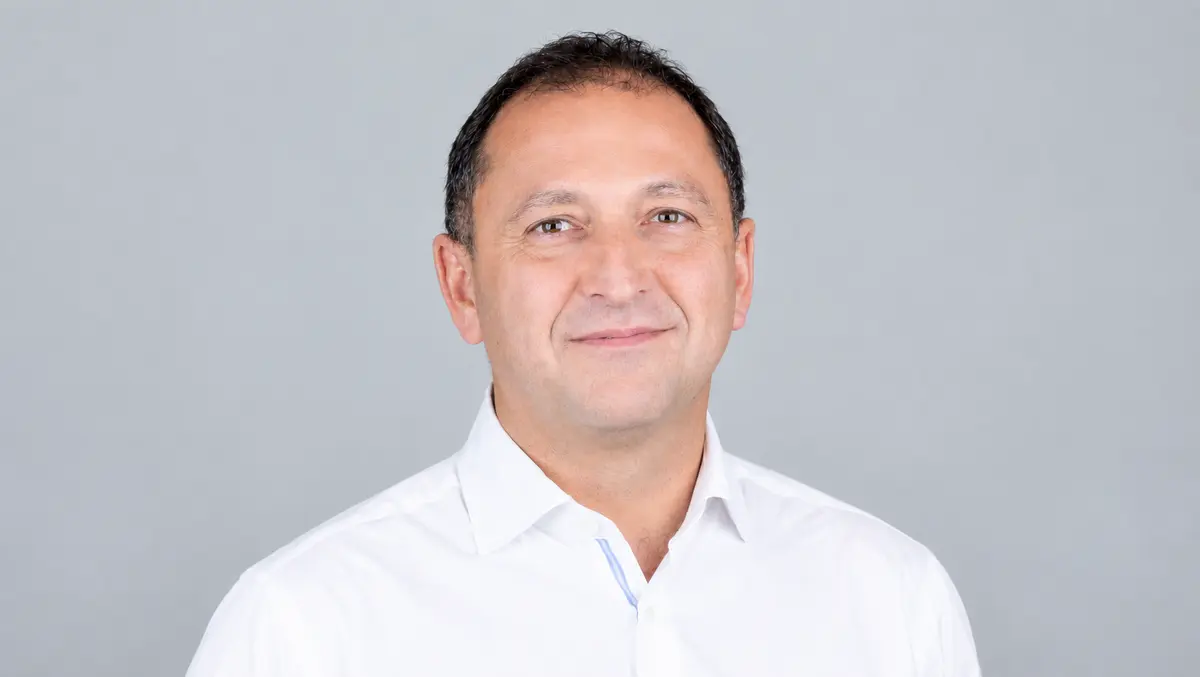
Instead, businesses are deploying new hardware gradually, creating a need for security platforms capable of supporting equipment from multiple vendors, according to Regional VP, EMEA & APAC Marketing at Genetec, Andy Mackay.
"The most important thing is that customers choose a platform that can expand and have that concept of being open," Mackay said.
He argued that an open architecture could allow organisations to introduce new capabilities without forcing them to undertake wholesale replacements of existing infrastructure.
The approach is becoming more relevant as physical security environments incorporate cameras, access control, intrusion detection, licence plate recognition and other technologies, while organisations simultaneously consider cloud-based services.
Three key pillars for a security platform
Organisations should consider three characteristics when selecting a physical security platform: openness, flexibility and unification, according to Mackay.
An open platform allows customers to use hardware and capabilities from different vendors, helping them maximise the value of existing investments while adopting new technology where logical.
Flexibility is also important because organisations have different requirements around where security infrastructure is deployed.
Some customers continue to operate their security environments entirely on-premises, while others are moving towards cloud deployments. But more and more organisations are embracing a hybrid approach.
A unified system allows organisations to manage different components of their physical security environment through a common platform, rather than maintaining disconnected systems for video surveillance, access control and intrusion detection.
This is particularly important for organisations with geographically distributed sites.
A growing number of customers are retaining on-premises infrastructure at headquarters while using cloud deployments at remote locations.
Instead of requiring the maintenance of physical infrastructure at every site, remote facilities can use cloud-based services while remaining part of a unified security environment.
"What we are seeing is a real growth in hybrid," Mackay said.
"We see the head office want to retain an on-prem environment, but for remote sites, they don't want the costs and the implications around having on-prem in those facilities."
Cloud security debate
The shift towards cloud-based physical security has also raised question marks over whether cloud environments are inherently more secure than on-premises infrastructure.
Mackay argued that cloud can provide security advantages because infrastructure is continuously updated by the provider.
"If you have a cloud infrastructure, you don't have to worry about the latest patch being deployed. 'Have I got the latest security fixes there?'" he said.
"The vendor will do all that for you."
However, security depends more on how a system was architected than whether it is deployed in the cloud or on-premises.
The growing adoption of cloud in physical security has also changed how the sector is perceived, with the industry following mainstream IT in moving towards cloud-based infrastructure.
Physical security remains somewhat behind mainstream IT in cloud adoption, but organisations are recognising that the technology needs to be considered in the context of the processes and outcomes it can enable.
Cloud implementation, however, does not necessarily eliminate the need for on-premises infrastructure.
Customers may want access to functionality available through cloud services while retaining control over some compute and infrastructure locally.
AI hype giving way to real business outcomes
Customer thinking regarding AI is also evolving, Mackay noted.
While demand for AI capabilities remains strong, businesses are starting to move away from buying technology just because it carries an AI label.
The physical security sector, like the wider technology industry, had experienced a period of intense AI enthusiasm, with some organisations effectively treating AI as a standalone budget category.
"I've heard of organisations that actually have a line item on their budget that says AI, which I find unbelievable," Mackay said.
The more important question, therefore, is what an AI-enabled system can realistically achieve for a company.
The distinction is particularly relevant in physical security, where AI-powered capabilities have existed for years.
Mackay cited licence plate recognition as an example. Rather than a police force necessarily setting out to purchase "AI", its objective is to identify and track vehicles efficiently.
The underlying technology may incorporate AI, but the business requirement comes first.
Organisations are therefore beginning to move beyond the initial fear of missing out associated with generative AI and instead asking whether a particular capability addressed a genuine operational problem.
"Humans are buying these systems, and we like the latest and greatest shiny thing," Mackay said.
"We've gone through that curve of people wanting AI because it's the latest and greatest. Now, they're asking: actually, what business challenge will that technology solve for me?"
Extending hardware lifecycle
The shift in AI perception is also relevant to the longevity of physical security hardware.
Rapid advances in technology can create concerns that newly purchased cameras and other devices could quickly become outdated as new capabilities emerge.
This has not materially reduced customers' appetite for physical security investment, but it reinforces the importance of choosing infrastructure that can evolve over time.
Rather than replacing an entire security environment whenever a new feature becomes available, an open platform can allow organisations to introduce new hardware and capabilities incrementally.
This can help customers avoid the cost and disruption associated with replacing functioning infrastructure while still giving them access to newer technologies.
Stadiums highlight role of unified security
Mackay also pointed to stadiums as an example of environments where integrated physical security is particularly important.
Genetec works with some of world sport's most revered cathedrals, including Eden Park in New Zealand.
The objective in a stadium environment is for security technology to work in the background, operating without disrupting the experience of players, staff and fans.
Genetec's philosophy is captured by the phrase "nothing happened today."
The scale and complexity of major stadiums make this particularly challenging, with tens of thousands of people moving through entrances and facilities while security teams monitor potential threats.
A unified platform allows stadium authorities to bring different security systems together, providing operators with a common view of the environment.
Data sovereignty becomes cloud priority
With cloud adoption on the rise, data sovereignty has become another critical consideration for Australian customers.
Organisations increasingly want the functionality offered by cloud services while retaining control over where their information is stored.
Regulatory requirements and internal compliance policies are contributing to the trend, with businesses seeking greater certainty over the location and handling of sensitive information.
Genetec's local data centres form a significant part of its cloud offering, allowing customer data to remain on Australian shores.
Mackay said this includes information such as login credentials and stored video recordings when customers choose to store that material in the cloud.
"As we grow our cloud offerings, we have ensured that our data centres are here in Australia," he said.
The combination of data sovereignty, hybrid deployment and open hardware support points towards a physical security market in which organisations are less likely to pursue wholesale technology replacements.
Instead, customers are looking for systems that can incorporate new capabilities while preserving existing investments, with cloud, on-premises infrastructure and AI operating in concert.