Productivity stories
Organisations risk losing control of AI agents unless they can track each one, assign ownership and prove it is still delivering value.
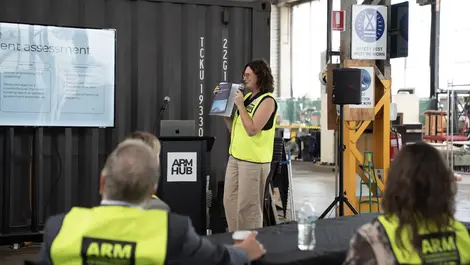
Independent modelling suggests a Brisbane not-for-profit could add AUD $6.48 to GDP for every dollar invested over 10 years.
Despite solid margins, firms in Australia, New Zealand and Singapore are keeping only about 70 cents in every dollar of existing revenue.
Unused enterprise systems can quietly drain millions in missed efficiency and extra work when businesses fail to capture new capabilities after go-live.
Despite 93% developer adoption, most firms are seeing only an 8% lift in throughput and many CIOs report breaking even or losing money on AI.
Friction in everyday finance work can tie up working capital, obscure cash visibility and consume staff time unless CFOs tackle it.
Business leaders are finding that AI is speeding up output faster than managers can absorb it, creating a new bottleneck across teams.
Businesses that track AI returns will pull ahead as agents start handling whole marketing jobs, from reports to customer offers, in 2027.
More workers now say being in person matters as AI reshapes jobs, with 22% citing physical presence as more important and 10% feeling less connected.
Automation of junior tasks could leave employers with fewer experienced professionals if young workers lose the chance to learn on the job.
Only 37% of firms say AI has lifted EBIT, leaving executives under pressure to show whether their spending is paying off.
Rising AI spending is forcing organisations to fix governance, ROI tracking and legacy systems before 2027 delivers any gains.
AI is turning meeting transcripts into searchable organisational memory, helping managers act on decisions and risks without attending every discussion.
Businesses that pair AI with human judgement are likely to gain more creative capacity, while reducing routine engineering drudgery and risk.
Individual workers are getting faster with AI, but survey data suggests most firms are still seeing little or no lift in productivity.
As AI rewrites coding routines, Logitech is selling mice, keyboards and a keypad to keep developers hands-on with the work.
Small firms will face pressure to prove AI delivers value as customers reward businesses that are easier to find, use and trust.
Rising AI demand is forcing operators to squeeze more useful computing from existing data centres before adding costly new capacity.
Retailers risk wasting AI unless it cuts the minutes lost to pricing checks, stock hunts and duplicate alerts on busy shop floors.
Most firms have yet to see AI boost revenue or cut costs, as a PwC survey found only 12% had achieved both despite heavy investment.