


MODLR launches visual scripting for no-code data flows
Wed, 11th Feb 2026.webp)
MODLR has added a Visual Scripting Engine to its corporate performance management platform, giving enterprise and partner customers a drag-and-drop way to build data integration workflows without writing code.
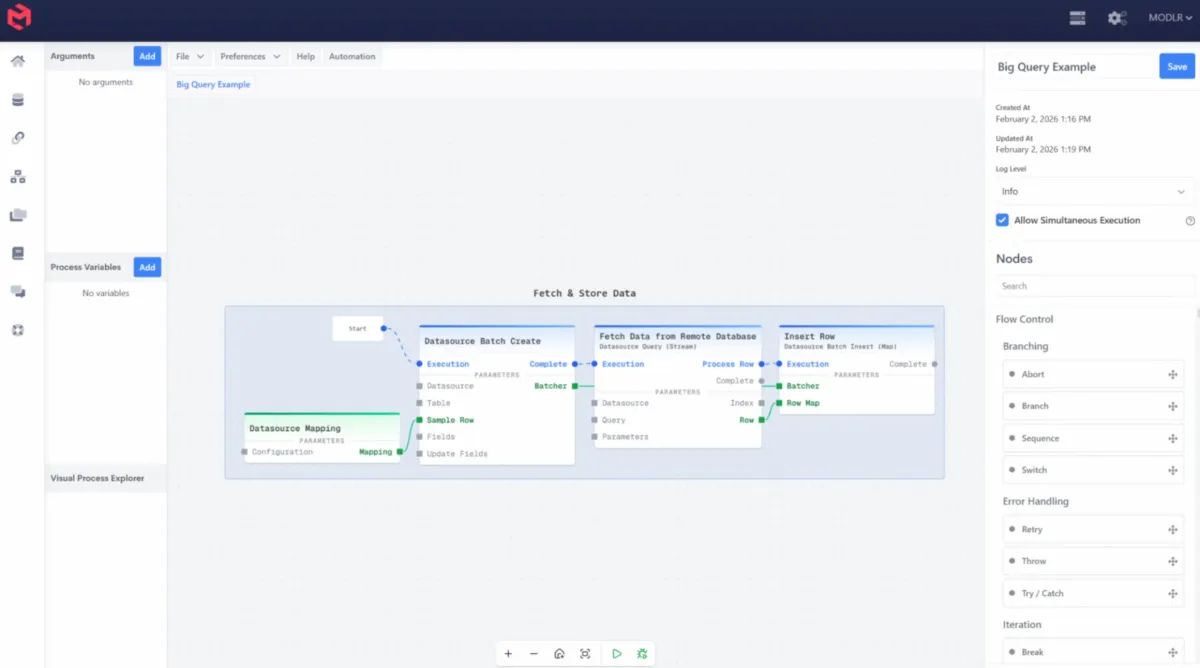
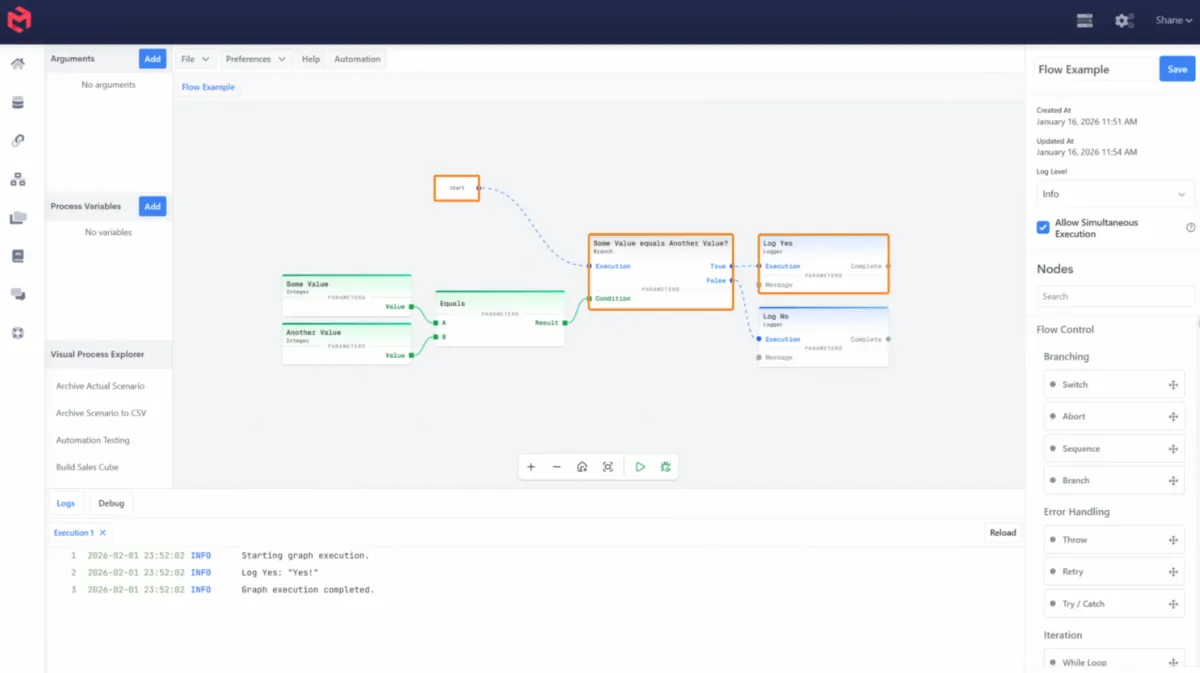
The engine sits alongside MODLR's existing JavaScript and mapping-based ETL and ELT options. It adds a flow-based design surface for building and running multi-source data pipelines. Users can assemble workflows from more than 150 reusable nodes covering connectivity, transformation, file handling, and model updates.
MODLR describes the launch as an expansion of its data integration capabilities aimed at helping teams build workflows with greater clarity and control. The engine is available across the platform for existing enterprise and partner users.
Workflow design
Visual Scripting Engine provides a diagram-style workspace where users lay out processes step by step. It supports branching logic, loops, and conditional rules, and includes built-in error handling and performance monitoring.
The engine connects to sources such as databases, cloud storage, servers, and APIs, including REST APIs and SFTP servers. Workflows can pull data from multiple systems, transform it, and load it into a single financial or operational model. MODLR says this approach maintains full audit trails for the resulting pipelines.
Native data utilities run inside the workflow, including string cleaning and reshaping, mathematical calculations, date and time formatting, and regex pattern matching for validation. MODLR says these utilities can reduce the need for external scripts and third-party software in some integration projects.
File operations
File and directory operations are included in the node library. MODLR lists automated CSV ingestion, scheduled exports, and secure archiving among the use cases. It links these functions to compliance processes and the need to maintain historical records, which often require controlled handling of source files and data outputs.
The engine also includes controls for cubes and dimensions-common elements in analytical and planning models. MODLR says it can update model dimensions as organisational structures change, such as when new products, customers, suppliers, or regions are added, or after mergers. These updates can help keep dashboards and reports aligned with current structures and master data.
Operational scope
Beyond workflow building, the product includes sub-process orchestration and step-through debugging. MODLR also highlights audit transparency as a core feature, particularly for regulated environments and finance teams that need traceable processes.
MODLR positions the engine for both finance and operational teams, with integrated workflows supporting near real-time analytical modelling. It also links Visual Scripting Engine to other parts of the platform, including live dashboards, financial models, AI commentary, and planning cubes.
Ben Hill, MODLR's founder and CEO, said ease of use and maintainability were central goals for the new feature.
"MODLR's visual scripting is a breakthrough in accessibility and flexibility. It makes data workflows easier to establish, document and maintain than ever before."
Industry examples
MODLR outlined several scenarios where customers are already using the engine. In manufacturing, it cited transforming multi-level bill-of-materials data into profitability views by SKU, plant, or region. In logistics, it pointed to aggregating consignment, scan, and fuel surcharge data into dimensional cubes for cost modelling and rate-card benchmarking.
In financial services, it referenced automated client profitability models, risk scenario analysis, and rate-benchmarking pipelines that reuse logic flows. In construction and retail, it cited integrating job costing, supplier feeds, and inventory data across systems, with dashboards that refresh automatically and downstream variance commentary.
These examples reflect a broader trend in finance technology as planning and performance tools move closer to data engineering tasks. Organisations often run core financial models in CPM platforms while maintaining separate integration layers, and vendors have increasingly added data preparation and orchestration features within analytics and planning products.
MODLR describes itself as a corporate performance management provider focused on financial planning and analysis workflows such as budgeting, forecasting, and planning. The company has offices in Sydney, London, and Wellington, and says organisations use its cloud service for business intelligence and performance reporting as well as planning processes.
Visual Scripting Engine is now part of the standard MODLR platform for enterprise and partner customers, with the node-based workflow builder available immediately for data integration and modelling tasks.