

LiberNovo launches gaming chairs amid GTA VI discomfort
Tue, 24th Nov 2026 (Today)
LiberNovo has launched its Omni and Maxis chair ranges in Australia, citing survey data showing many Australian gamers experience discomfort while playing.
The seating brand is targeting players who spend long periods gaming around the release of Grand Theft Auto VI. Its survey of 1,000 Australian gamers found launch-week players planned to spend almost 23 hours in-game during the first week, while nearly one in five, or 18%, expected to play 40 hours or more.
At the same time, 87% of respondents said they already feel physical discomfort when they play, and 48% said it begins within the first two hours. Among those who experience discomfort, 69% said they had not ended a single session early because of it in the past year.
Chair range
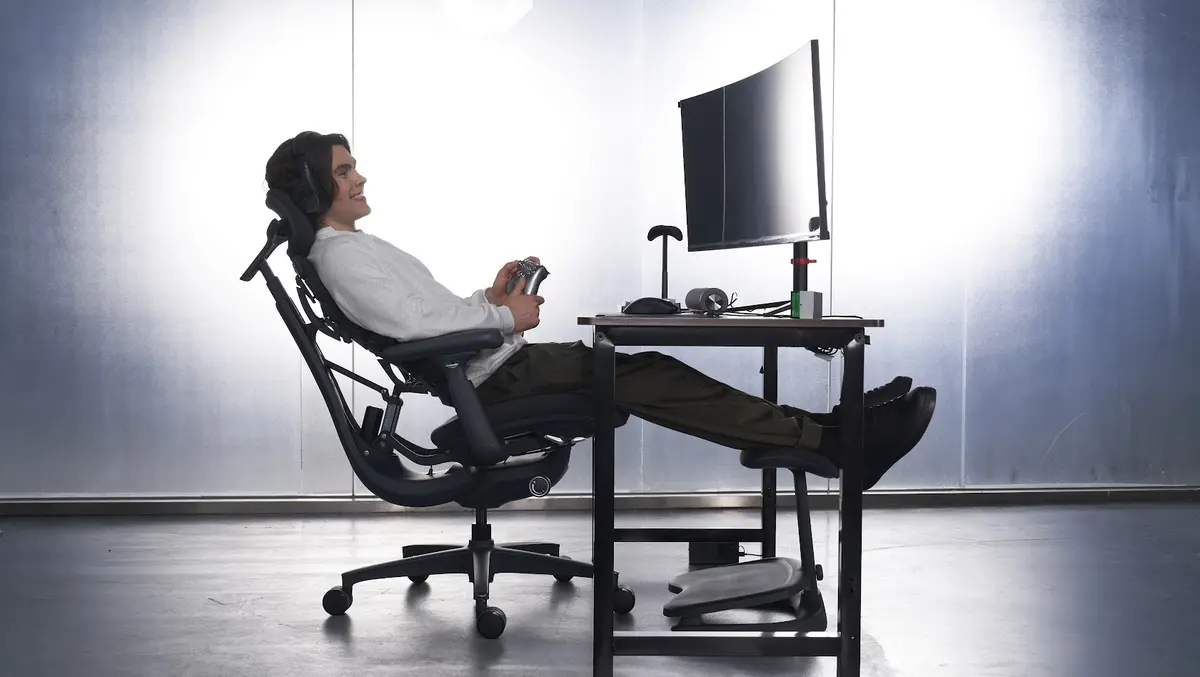
The new line-up includes the Omni Pro, priced at AUD $1,699, and the Maxis Series, starting at AUD $1,799. The chairs are designed around what LiberNovo calls Dynamic Ergonomics, an approach centred on movement rather than a fixed posture.
The Omni Pro includes electronic lumbar adjustment, a five-minute motorised lower-back stretch function called OmniStretch, five recline positions up to 160 degrees, and seat ventilation. It is designed for users about 153cm to 186cm tall and up to 136kg.
The Maxis Series is aimed at larger users, with dimensions for people about 178cm to 200cm tall and up to 181kg. It is available as the Maxis Manual at AUD $1,799 and the Maxis Airflow at AUD $2,599, with the latter adding electronic lumbar adjustment, the stretch function, and ventilation.
Lower-priced models in the range include the Omni Gen at AUD $1,499 and the Omni SE at AUD $1,199.
"Gamers have upgraded the console, the screen and the headset for GTA VI, but the thing their body is spending almost 23 hours on this week is an afterthought. Before you settle in for your next session, rethink your set-up. Our chairs are designed to move with you, so you can change position as often as your body needs without leaving the game," said Luchuan Li, Chief Operating Officer at LiberNovo.
Discomfort data
The survey found 76% of gamers feel discomfort in their neck, shoulders or back. The most commonly cited problem areas were the neck at 43%, the lower back at 38%, and the shoulders at 35%.
Women reported higher rates of discomfort in some areas than men. Female gamers were more likely than male gamers to report back discomfort, at 53% compared with 45%, and shoulder discomfort, at 40% compared with 30%.
Spending priorities also pointed to a gap between gaming equipment upgrades and seating. Twice as many respondents said they stocked up on snacks, at 14%, as upgraded the seat they play in, at 7%.
New consoles, at 14%, headsets, at 12%, and televisions, at 10%, all ranked ahead of chairs as launch-related purchases or upgrades.
Physio view
Sydney physiotherapist Linda Moon said the pattern of sitting for long periods matters as much as the total number of hours played.
"Almost 23 hours of gaming is comparable to a long-haul flight from Sydney to London, except instead of being stuck on a plane, you're voluntarily staying in the same position. The biggest concern isn't the hours themselves, but how they're accumulated. Twenty-plus hours spread across a week with regular movement breaks is very different from sitting for five or six hours straight," said Moon.
Moon said discomfort should be treated as a cue to move rather than ignored.
"You might be driving around Vice City for hours, but your body has barely moved. Discomfort is often your body's way of asking for a change of position. It doesn't automatically mean injury, but pain is information and a signal, not something you should continuously ignore. You can pause the game. You can't pause your body's need for movement," she said.
The report was based on research conducted among Australians aged 18 and over who had played video games in the past month.