

Databricks AI helping telcos prevent churn, predict fraud
Mon, 21st Sep 2026 (Today)
Telecommunications companies are increasingly using artificial intelligence and unified data platforms to predict customer problems, reduce churn and identify fraud before it occurs.
Nevash Pillay, Global Head Communications Industry at Databricks, said telcos are among the organisations with the most to gain from bringing together large volumes of customer, network and operational data and making it available to AI systems.
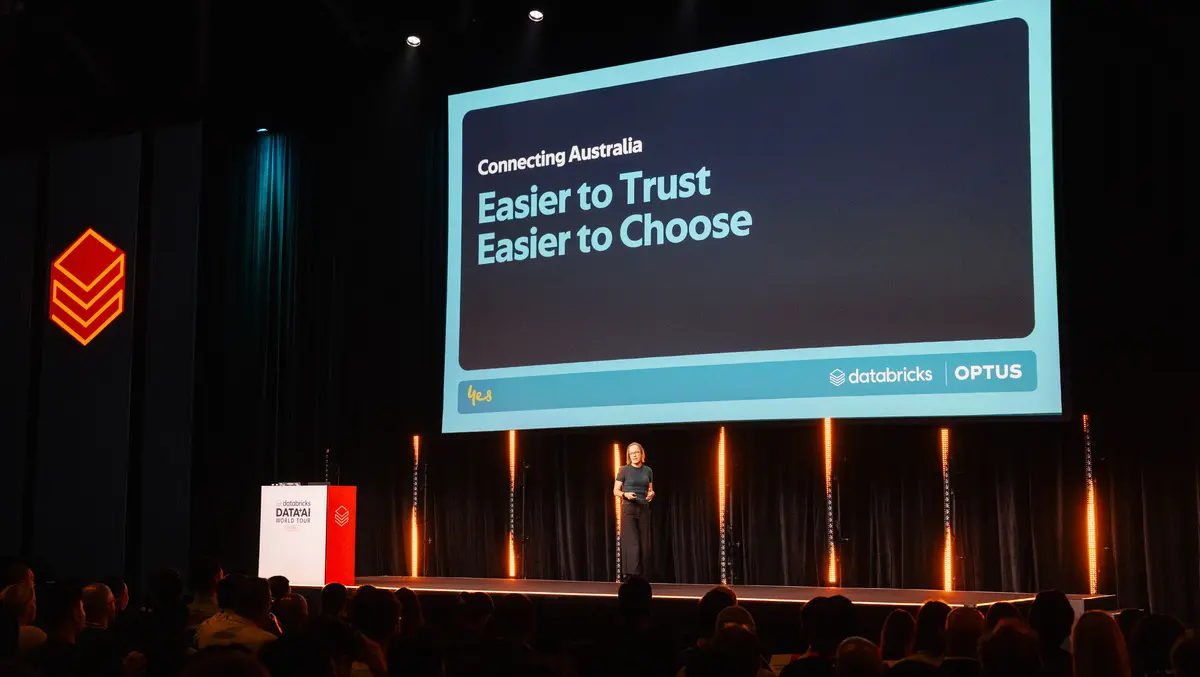
Speaking at Databricks Data + AI World Tour in Sydney, Pillay said CX, network automation and fraud had emerged as the three biggest areas of AI focus across telecommunications markets globally.
Telcos are particularly well positioned to use AI because they hold vast amounts of data about customers and networks, but many are also dealing with decades of accumulated technology debt.
"Telecoms are large organisations, and they've been around, most of them, for more than 50 years," Pillay said.
"As a result, they have numerous applications, legacy and new, and they typically have tens of millions of customers."
This creates an opportunity for AI to unify data that has historically been spread across multiple systems.
A customer contacting a telco's call centre, for instance, may previously have needed to explain the same problem multiple times, especially if they subsequently visited a retail store.
AI agents can bring together information from previous interactions and flag customers who have repeatedly attempted to resolve an issue.
"If you've called three times about an issue, what you want is your AI agent to flag that as a customer who may not have had the issue resolved," she said.
Now the telco can intervene proactively, instead of waiting for customers to make another complaint or consider switching providers.
Predicting customer churn
Customer churn is another major application for artificial intelligence in the telecommunications industry.
Companies are capable of combining signals including customer interactions, orders and service issues to develop a churn score and identify customers at risk of leaving, with the objective of giving telcos enough lead time to offer an alternative service or address the underlying problem.
Pillay cited US telco Frontier as an example, with the company significantly reducing customer churn by utilising agents to identify customers at risk of leaving.
AI is also being used to anticipate what customers may need next.
For the SMB market, companies can use information about existing services to identify potential requirements such as cybersecurity, connectivity or other technology services.
This moves the role of the telco from simply responding to customer requests towards proactively recommending services based on the customer's circumstances.
A similar approach can be utilised for billing and offers for end users, Pillay noted.
For example, a family with several mobile services, shared bills, home connectivity and streaming subscriptions could be presented with a more personalised bundle based on how the household uses its services.
"If someone offered me a package or a bundle for my family, I'd think, 'Hey, somebody actually cares enough to know what I need next'," she said.
Agentic adoption on the rise among telcos
Databricks is also seeing telecommunications businesses exploring agentic as a way of giving employees faster access to business information.
Databricks has developed a finance-focused version of its Genie AI assistant that can allow users to ask questions across information held in systems such as SAP and Oracle using natural language.
Louisiana-based Lumen Technologies has reduced the time required to answer financial queries from two days to about 30 seconds.
The same concept can be applied to customer service, with employees able to retrieve information without navigating multiple applications.
For customers, AI agents could also help make interactions more predictive.
Pillay gave the example of a customer travelling overseas. An AI assistant could identify that the customer was now in Australia and alert them that their next bill would be higher because of international roaming charges.
Rather than requiring the customer to discover the additional charge when the bill arrives, the telco could explain the situation immediately and provide an option to change the service.
Smarter fraud detection
Fraud has become another significant AI use case for telecommunications companies, particularly as telcos combine network, customer service and location data.
Fraud involving SIM swaps, subscriptions and robocalls typically follows patterns that become visible only when information from multiple systems is analysed together.
AT&T has deployed 100 machine learning models and reduced fraud proactively by 80 per cent.
Another example involves geo-velocity insights.
A fraudster attempting to impersonate a customer could make repeated calls from geographically distant locations within a short period. Looking at those interactions individually may not reveal a problem, but combining the call records and location information can identify travel that would break the laws of physics.
"If you called to say that you're me, you've lost the phone, please cancel my SIM - the telecom can identify that the first call you placed was from the Philippines and the second call you placed from Sydney, but the calls came ten minutes apart," Pillay said.
Bringing these datasets together allows AI models to identify patterns that may otherwise be missed.
Governance remains critical
The growing use of artificial intelligence is also placing greater emphasis on data governance, access controls and lineage.
Telcos manage sensitive customer data, making it critical that AI systems only provide employees with information they are authorised to access.
Databricks' Unity Catalog provides controls intended to ensure users receive access to the appropriate information.
"Having worked in a telecom myself for a long time, you're typically going to have tens of thousands of people, and the access each person has to different tools is going to be different," she said.
The challenge is particularly relevant as organisations connect AI agents to an increasing number of enterprise systems.
Governance, lineage and access controls, therefore, must be incorporated alongside AI adoption, not treated as an afterthought.
Australian trends mirror global markets
While telecommunications markets differ, fundamental AI priorities are largely uniform across regions.
In the US, telcos are increasingly looking at the relationship between network and customer data, including using combined information to identify potential network outages.
For example, an increase in call centre demand could potentially provide an early indication of a network problem even when network monitoring systems appear normal.
Across EMEA, Pillay noted there is strong appetite for AI assistants, including for internal employees, vendors and channel partners.
In APAC, meanwhile, some telcos that have spent several years establishing their data foundations are now moving towards deploying AI use cases.
The distinction across markets mostly comes down to where individual organisations are in their technology journey rather than fundamentally different business objectives.
"Those who have been with us for four or five years are now focused on the use cases with AI to deliver outcomes," she said.
In the ANZ market, Databricks is working with telecommunications companies including Telstra and Optus, with Pillay saying the company had engaged with several of the region's other telcos.