

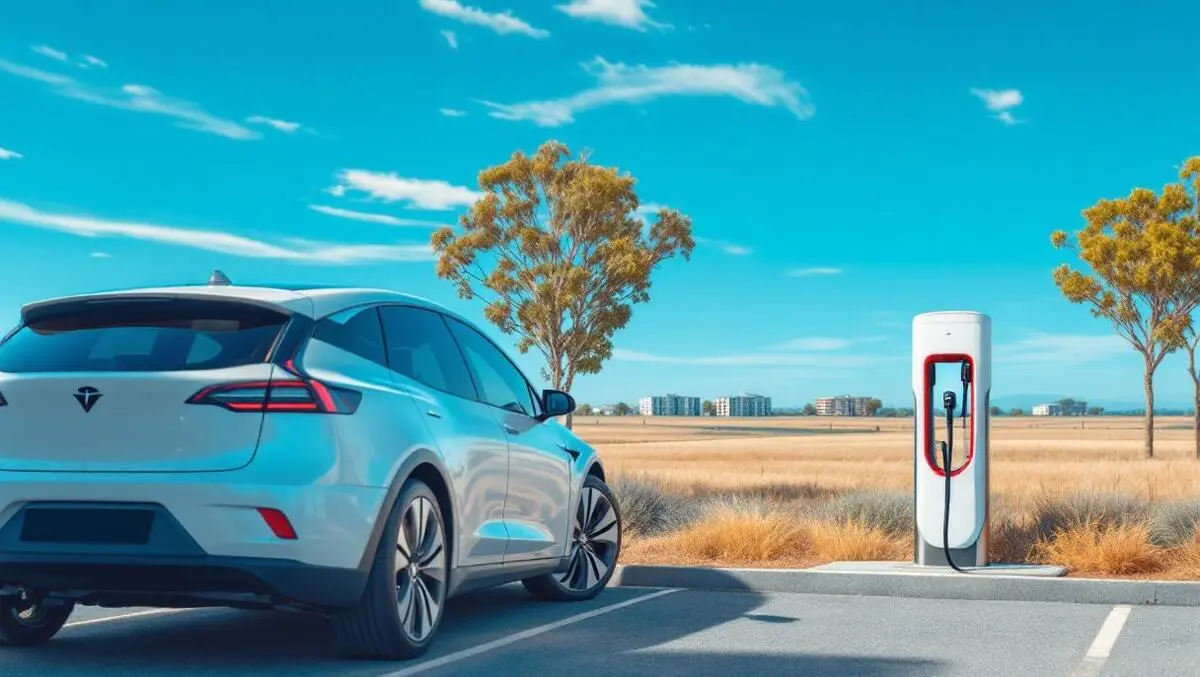
Australia's EV growth hampered by slow infrastructure rollout
Tue, 29th Jul 2025
Australia's electric vehicle (EV) market continues to trail behind global counterparts, with infrastructure limitations cited as the primary hurdle to wider adoption.
New records were set for EV sales in Australia at the end of 2024, with EVs accounting for one in ten vehicles sold. However, Australia remains far behind regions such as the European Union and the United Kingdom in terms of EV penetration and accessibility.
Persistent perceptions among the public suggest that high vehicle cost, perceived inconvenience, or performance concerns are the major barriers to wider EV uptake across the nation. Industry observers and stakeholders point to a different obstacle: supporting infrastructure and regulatory frameworks have failed to keep pace with consumer interest.
Infrastructure lag
The imbalance between consumer demand for EVs and infrastructure availability is becoming more pronounced. One significant complication is the challenge faced by residents of apartment buildings wishing to install home chargers. Extensive legal, regulatory, and body corporate approval processes can slow or block installation, discouraging many potential adopters.
According to the Australian Bureau of Statistics, one in ten Australians lives in an apartment, while market data shows that nearly 80 percent of EV owners prefer to charge their vehicles at home. This disconnect highlights the impact that current building regulations and planning processes have on slowing the adoption of EVs at a residential level.
Truman Zhang, President of Dahua Australia and New Zealand, highlighted the challenge, stating,
Many apartment buildings were never designed to handle the electrical load of one, let alone multiple EV chargers, meaning significant infrastructure upgrades are needed to encourage the EV transition. We are fortunately seeing state government initiatives address infrastructure issues, like how the NSW Government has invested AUD $10 million in grants to overhaul over 100 apartment buildings with EV charging stations. Australia must avoid a chicken-egg scenario, where EV demand is held back by a lack of infrastructure, and infrastructure is held back by a lack of EV demand.
For many residents, particularly those in older apartment complexes, building power supply and upgrade costs can prove prohibitive, leading to lengthy deliberations and, in many cases, inaction.
Regional disparity
The challenge is not limited to urban areas. Access to public charging infrastructure in regional Australia remains starkly limited. Almost nine out of ten public chargers in Victoria and New South Wales are found in metropolitan centres, leaving regional communities with far fewer options.
While metropolitan areas have seen a gradual increase in charger installations, this expansion sometimes results in residents losing existing parking spaces to new charger allocations. Meanwhile, residents outside major cities are often left behind, unable to take practical advantage of EV ownership.
Zhang suggested a potential solution to address this disparity, saying,
Government could consider incentivising regional automotive businesses such as repair shops, to offer charging options, reducing the need for extensive infrastructure development.
Such measures could provide greater access to charging points in regional areas without requiring more extensive investment in new public infrastructure.
Affordability perceptions
Cost remains a critical part of the national conversation about EV uptake, but the picture is shifting, according to the sector. While 44 percent of Australians say they cannot afford an EV, recent shifts in government policy and new market entrants mean the retail price for EVs in Australia has dropped, in some cases by up to AUD $20,000. The arrival of EV utility vehicles and four-wheel drives that rival internal combustion models in both price and performance is also beginning to narrow the perceived value gap.
Reflecting on the state of Australia's EV transition, those in the industry continue to underline the role that policy, infrastructure investment and public-private partnerships will play in making broader adoption possible. Several state and federal government schemes seek to address different aspects of the infrastructure imbalance, but sector stakeholders argue that a more integrated national approach could help resolve bottlenecks faster, especially in the context of residential and regional accessibility challenges.
For now, the sector remains focused on overcoming planning and logistical barriers, while consumers watch value and convenience shift slowly in favour of electric vehicles.