

Atturra joins monō ai to push enterprise AI redesign
Wed, 1st Apr 2026
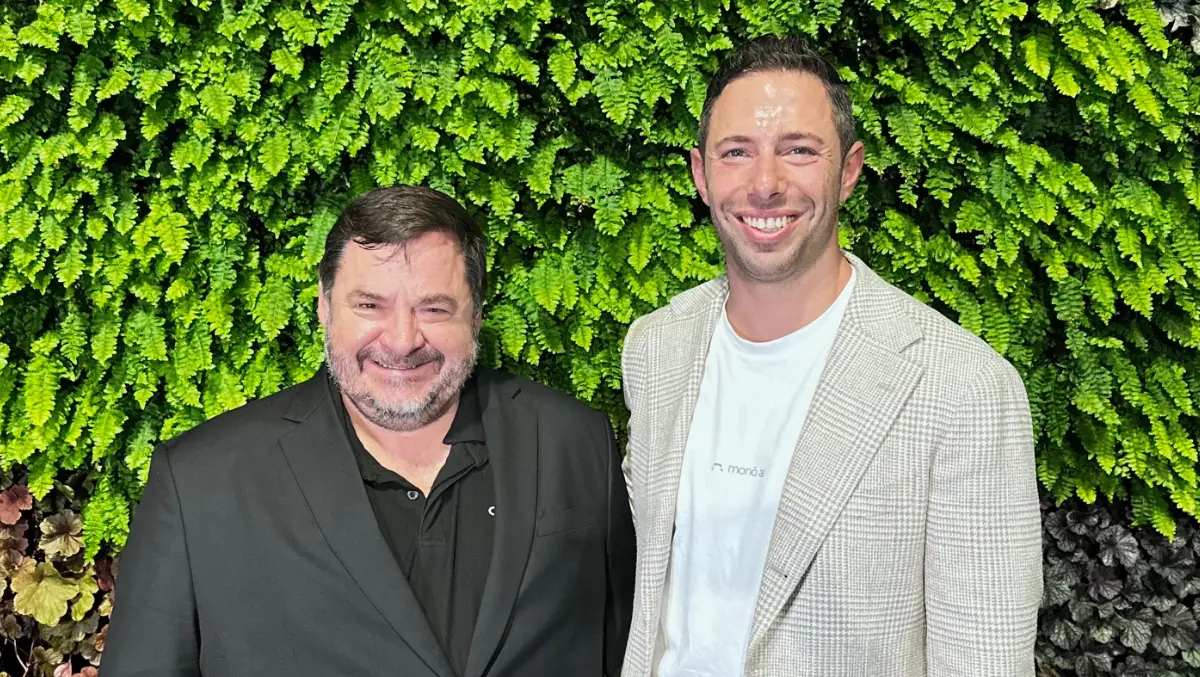
Atturra has become a founding partner of Australian artificial intelligence platform company monō ai, linking the services firm with a business founded by Lendi Group founder David Hyman.
Under the arrangement, Atturra will combine its transformation, delivery and enterprise integration capabilities with monō ai's platform for established organisations. The aim is to help clients assess which tasks should remain with staff, which should be supported by AI and which could be automated.
monō ai was founded by Hyman, who previously led the AI-native transformation of Lendi Group. That business manages a loan book of more than $105 billion. According to the release, its changes shortened software delivery cycles and introduced agentic AI across mortgage operations in a regulated setting.
The partnership gives Atturra a formal role in monō ai's push into enterprise customers at a time when many large organisations are still trying to move beyond pilot projects. The model outlined by the companies starts with a fixed-scope proof-of-value deployment focused on one process, before a broader rollout across teams and business units.
Work redesign
Stephen Kowal, Chief Executive Officer of Atturra, said the agreement reflects the company's broader view of how organisations should adopt AI.
"Our relationship with monō ai is an important, strategic step for us and aligns with our broader sovereign AI-first direction," said Stephen Kowal, Chief Executive Officer, Atturra. "The partnership is built around a shared view that AI is not fundamentally a tooling issue but a work redesign issue," said Kowal.
Atturra said its internal AI strategy centres on changing workflows before automating them and embedding AI into products and services. It is also working towards more scalable, agentic operating models in its own operations.
Kowal said many AI projects falter when they are treated as technology exercises rather than business change programs.
"The partnership creates a practical pathway to move beyond pilot activity and redesign work in a way that is commercially meaningful, operationally realistic, and properly governed," said Kowal.
"Our clients can use the partnership to identify where human effort is being consumed by low-value motion, where AI can remove friction, and where entirely new operating patterns are possible," added Kowal.
Platform model
monō ai said its system is designed to embed AI in an organisation's operating environment so work developed for one deployment can remain in the platform and be extended over time. The release described this as a path towards an enterprise-wide AI operating system rather than a series of isolated use cases.
The approach is aimed at established companies facing pressure from newer AI-native businesses. According to the release, monō ai's market offering is based on production experience from Lendi Group rather than theoretical models.
Atturra said the partnership is intended to help customers decide not only where AI can be inserted into existing processes, but also whether those processes should be redesigned first. That distinction has become central to many enterprise AI projects as businesses test whether generative AI tools can do more than improve individual tasks.
Kowal expanded on that view.
"monō ai provides the technology foundation for AI-native operations, while Atturra provides the capability to embed that foundation into real enterprise environments," said Kowal.
"AI doesn't make broken workflows faster but rather makes the case for redesigning them. That's where Atturra and monō ai come in. We're not here to layer AI over how work currently happens. We're here to change how work happens," added Kowal.
Enterprise focus
Atturra is listed on the ASX and provides advisory, consulting, managed services and technology work across sectors including local government, utilities, education, defence, state and federal government, financial services and manufacturing. Its customer base includes large public and private sector organisations in Australia.
Its decision to align with monō ai suggests it sees AI demand shifting from experimentation to operational change. For service providers, that can mean longer and more complex engagements tied to workflow design, governance and integration with existing enterprise systems.
For monō ai, the partnership provides access to an established technology services business with enterprise delivery and integration experience across government and regulated industries. That could be significant in sectors where organisations must adapt AI tools to legacy systems and formal oversight requirements.
The release also included a comment from Hyman on the company's aims for customers moving beyond limited AI tests. It said monō ai was built to help organisations apply AI in day-to-day operations and that its team draws on experience in large, regulated businesses.
Kowal framed the agreement as a response to the pace of AI development and the pressure on customers to turn that change into practical operating models.
"I am very excited by the opportunities that will emerge as a result of this new partnership," said Kowal. "With the pace of AI development continuing to increase, it will ensure we can deliver the capabilities that our clients require to flourish," added Kowal.