

SAP and DalRae: Why standardisation isn't an enemy of innovation but an enabler
Mon, 24th Nov 2025
In an era where every business is racing to implement AI and tout their latest technological breakthroughs, one voice is cutting through the noise with a decidedly different message: slow down, simplify and build on solid ground.
Great AI needs great architecture, and sometimes standardisation is the means to realising greater innovation within your business and teams. It could sound like a counterintuitive proposition in a world obsessed with customisation and competitive differentiation, but it's one that's proving transformative for organisations willing to challenge their assumptions about what truly drives value.
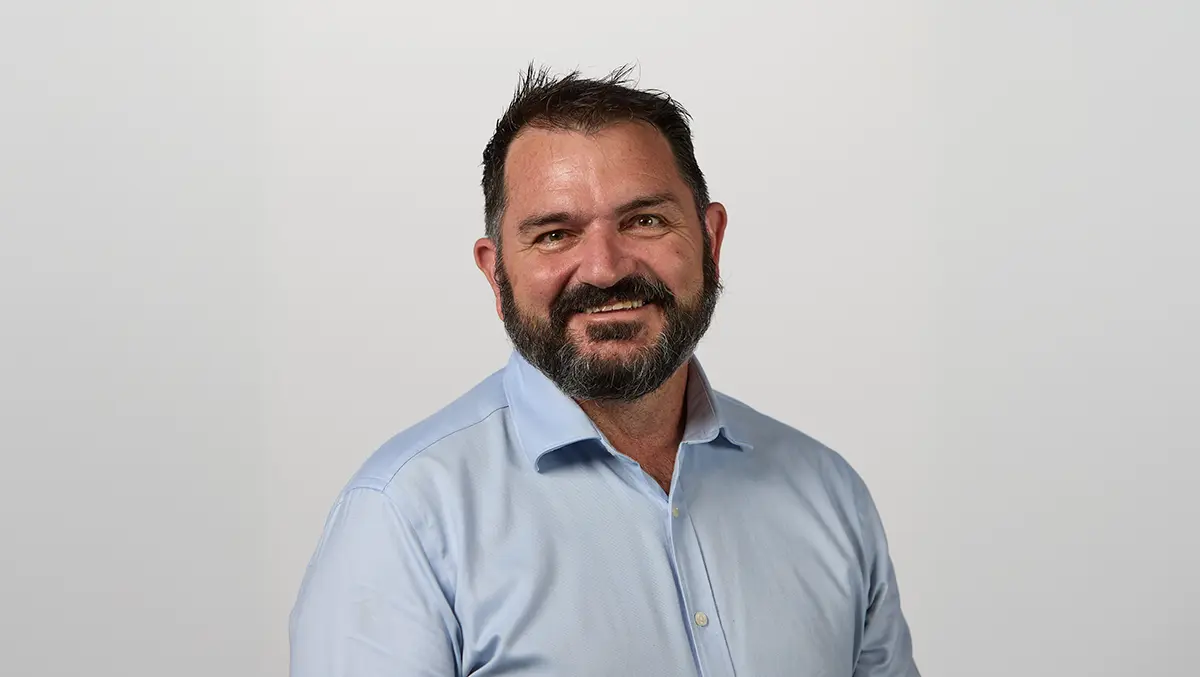
These were some of the insights offered by Chris Rae, Founder and Chief Architect of DalRae Solutions, the Australian IT consultancy firm, now part of Atturra, and known for providing SAP software solutions to the Asia Pacific market.
With years' of experience implementing enterprise systems across diverse industries, Rae has witnessed firsthand how businesses can get trapped by their own unique processes. Modifications that once seemed essential now stand as barriers to innovation, agility and the very AI capabilities they're desperate to adopt.
His perspective challenges a common belief in the business world: that competitive advantage comes from doing things differently. Instead, Rae argues, true differentiation today comes from doing standardisation exceptionally well, eliminating friction wherever possible, and understanding the specific ways in which your business can make life easier and better for your users or customers. With this philosophy Rae and his team are helping Australian businesses cut through complexity, reduce costs and position themselves to take advantage of AI's potential - not someday, but right now.
Why smart architecture beats the AI arms race
When asked what he's most excited about in regards to SAP's recent announcements, Rae replied, "It's not about racing to have the latest or best AI model, it's about having the clever architecture that connects all of the pieces of the puzzle. SAP has done this with AI models and agents. Instead of building their own chatbot or LLM, they've created a connector that integrates the various LLMs the customer may be using."
Rae is referring to SAP Build, the company's flagship solution for enterprise application development and automation, designed to give developers more freedom to build, extend and automate using the tools they use most often.
For instance, developers who prefer agentic development solutions such as Cursor, Claude Code, Cline and Windsurf can now use SAP development frameworks with new SAP Build local Model Context Protocol Servers. Visual Studio Code users will be able to access SAP Build capabilities directly in their development environment with a new SAP Build extension.
SAP and n8n also announced plans for an integration so Joule Studio agents and n8n agents can work together. And with new agent building capabilities in Joule Studio, developers have the tools they need to extend SAP's ready-to-use agents and build new agents grounded in SAP business data and context that can act autonomously based on changing business conditions.
On these updates, Rae comments, "We don't give SAP enough credit for the kind of thinking and engineering that goes into this, while still keeping up with AI announcements that still resonate with the masses. It's a well thought out architecture. Considering everyone else is running at the start line, trying to have something that's not just hype, this is genuinely exciting, and they've done a lot of work at the architecture layer to get it ready. To me it also speaks to the simple acceptance or realisation that customers are going to be using lots of different services. I can't think that there's any other vendor that comes to mind that has that same sort of approach."
The clean core revolution: Less customisation, more innovation
Alongisde SAP's work on AI models and agents, 'clean core' was a key topic of conversation.
Maintaining a 'clean core', that is, ensuring enterprise systems use standard processes with minimal customisation, is now a top business priority for leading organisations, and it's an increasingly important conversation Rae is having with businesses throughout Australia. Essentially, aligning with SAP's best practices and focusing on standardisation can significantly simplify ongoing digital transformation and open up new automation and AI-driven opportunities.
Rae comments, "Clean core means change. It means standardisation without loss of customisation. It means a better system, support line and outcomes. For the businesses we work with, we've been asking, "How close can I get to standard?" Using a whitelisted API from SAP with an enhancement point, it's upgrade safe. Now I prompt businesses to keep clean core in the forefront of their mind. It's a once in a lifetime opportunity and makes a huge difference for being able to innovate quickly and effectively."
Rae continues, "As an executive or a CIO looking at your system, you want to be able to watch that roadmap and keep it as standard and simple as possible. When considering greater complexity, you need to be asking: do we really need this function? What value does it bring? What do we need to do beyond turning it on?"
As part of the clean core conversation, Rae encourages businesses to consider what tool is most appropriate for the problem that they're trying to solve. He uses procurement as an example.
He says, "All of the steps of procurement or other workflows simply may not be necessary. What we find out is procurement is the same everywhere for 99% of the steps. So, for example, the 400 steps we did is just extra work for you, it doesn't add value. What we want to do is get rid of all those steps and return to a standard process, or fit to standard. We appreciate that you think your procurement is special and unique, but generally speaking yours is like everybody else, and your quirk only needs a small extension."
With clean core, businesses are able to build on the standard models with extension patterns, but they don't lose out on essential upgrades or the innovation of AI, which relies on standard data and processes.
Rae says, "You can still add your quirks and extensions, but the more standard you are the more things just work, and the more you do that clean core journey, the easier it is for you to uptake the announcements that SAP is delivering."
The way Rae sees it, standardisation is a competitive differentiator. He says, "The most value that you could get out of your SAP system would be to turn your advantage off and go back to standard SAP process. That's why we talk about competitive differentiators. Perhaps for a period you were a first market mover with your unique process, but the moment it becomes standard, you should return to standard, because then we leverage all of the out of the box agents and all the other functionality that will help you. If you kept it your way, you're actually falling behind your competitors that are back in the standard product."
The hidden goldmine: How eliminating small frictions creates massive value
In addition to clean core, focus on reducing friction creates differentiation. Sometimes it isn't the flashy innovation, it's simple changes that can make a huge difference.
Rae shared an example of a mining customer in Western Australia that's required to ensure adequate safety measures are continuously upheld. As he shared, legislation changes meant the business had to tighten up license regulation, with site supervisors having to know at all times who was licensed to operate what machinery.
Rae describes the complexity of this: "As a contractor, when there's a shutdown, they bring in a few thousand workers. Those contractors, before they start, would take photos of all their IDs, put it in their email, send it from their personal email into those inboxes. Those inboxes go to central HR, where the team downloads the documents. Ultimately this process was extremely manual, extremely cumbersome, and just a pain. And what happened was people were just carrying their licences all day, every day, because the site supervisors had to know who could operate what machinery and there was a gap in the data - there was no trust of the data."
Within SAP, Rae and his team created an application to solve this issue. It's both very simple and very transformative.
Rae describes, "Now, as part of onboarding for contractors, HR sends an email with a link to the business technology platform application, which opens into a web app. The contractor hits the button, takes the photo of their license and uploads the documentation. We use AI to pull out all the relevant details securely with all the right payloads and everything behind it. There's the real version and the copy. Somebody checks that there's no major errors.
"The moment they hit approve, it triggers off a workflow which is ultimately recorded in SAP SuccessFactors as a learning item with an expiry date, that says when the employee's information or contract is expired. For instance, if someone's license is going to expire in six weeks, the system will notify them to go and get a new one.
"To connect this to the work site we built a dual studio agent that's deployed out to the work zone, which means it's on mobile for all the site supervisors. Now every site supervisor can immediately bring up the information they need. The hierarchy is mapped, and they receive real-time information. For instance, they can see if someone has a current license without seeing any personally identifiable information such as the license number, expiry date and that kind of thing."
As Rae says, it's a very simple use case, but saves the business the hourly equivalent of two full time employees, and thousands of pages in printing. This equates to thousands in costs saved.
Rae says, "It's a wonderful example because it is so simple, but it's very reflective of how those small fractions can have a huge business impact."
The bottom line: Simple solutions, profound impact
Chris Rae's insights highlight that success in the age of AI isn't about chasing the shiniest new tool or building the most complex custom solution. It's about smart architecture, strategic standardisation and focusing on removing friction from everyday work.
As businesses navigate the AI age, Rae's advice offers a refreshing counterpoint to the hype cycle: embrace clean core principles, leverage standardised processes and look for those small friction points that compound into massive inefficiencies. Sometimes the most transformative technology isn't the one that dazzles in a demo, it's the one that quietly makes your team's daily work exponentially easier.