

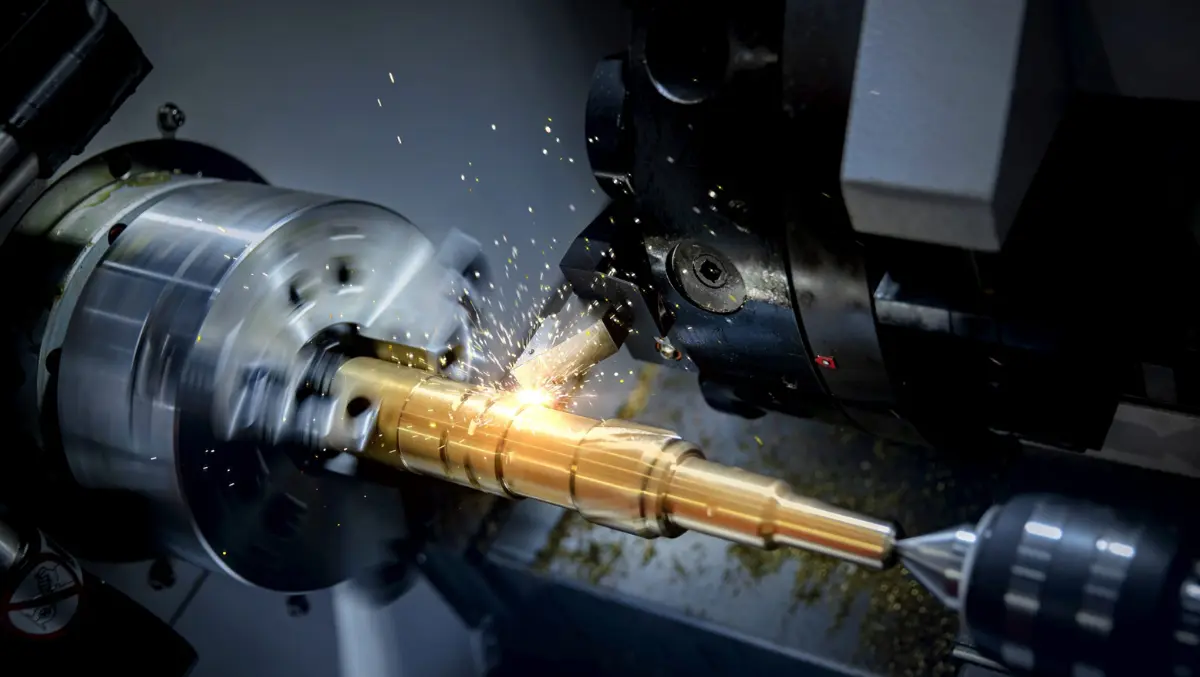

The manufacturing floor has always been a place where mistakes are expensive. A misaligned tool, a miscalculated feed rate, or a flawed program can mean scrapped material, damaged machinery, and hours of lost production time. For decades, the only way to truly validate a CNC program was to run it - and hope for the best. Digital twin technology is changing that calculus entirely.
A digital twin is a precise virtual replica of a physical machine, process, or system, updated in real time using data from its real-world counterpart. In the context of CNC machining, it means manufacturers can simulate every tool movement, every spindle load, and every potential collision inside a computer before a single chip is cut. For operations offering custom CNC machining in Australia - where lead times are tight, materials are costly, and skilled machinists are in short supply - the ability to validate a job completely in the virtual world before committing to the physical one is fast becoming a competitive necessity.
From Simulation to Full Digital Twin
It's worth distinguishing between traditional CNC simulation and a true digital twin. CAM software has offered toolpath simulation for years - animated previews that show where the cutter travels. Useful, but limited. These simulations are essentially mathematical predictions based on the program alone. They don't account for the actual behaviour of your specific machine, its wear characteristics, thermal drift, or real-world vibration patterns.
A digital twin goes further. It mirrors the precise kinematics of a specific physical machine - not a generic model, but your machine, with your tolerances and your historical performance data baked in. When you run a simulation on a digital twin, you're not just checking toolpaths. You're stress-testing the job against a virtual copy of the exact environment it will run in.
Platforms like Siemens' Sinutrain, Hexagon's simulation suite, and Autodesk's integrated manufacturing tools are pushing hard in this direction, building environments where the gap between the virtual and physical machine is increasingly narrow.
What Manufacturers Actually Gain
The most immediate benefit is collision detection. CNC crashes - where the tool or spindle slams into a fixture, clamp, or the workpiece itself - are among the most costly events in a machine shop. They damage spindles, tooling, and parts simultaneously, and can put a machine out of action for days. Running a job through a high-fidelity digital twin before it hits the floor catches these events before they happen, every time.
Beyond collisions, digital twins allow manufacturers to optimise cutting parameters with a level of confidence that wasn't previously possible. Feed rates, spindle speeds, and depth of cut all interact in complex ways depending on material, tooling, and machine rigidity. Simulating these interactions on a virtual machine that reflects real-world dynamics means manufacturers can push parameters closer to their true limits - improving cycle times without gambling on expensive materials or tooling.
There's also a powerful quality assurance angle. By comparing the digital twin's predicted output against actual metrology data from finished parts, manufacturers can detect drift - the slow degradation in accuracy that comes from tool wear, thermal expansion, or ageing machine components - before it produces out-of-tolerance parts.
The IIoT Connection
Digital twins don't exist in isolation. Their real power emerges when they're connected to live machine data through the Industrial Internet of Things (IIoT). Sensors embedded in modern CNC machines continuously stream data on spindle load, temperature, vibration, and positional accuracy. Feed this into the digital twin and the virtual model updates in real time, creating a feedback loop between the physical and digital worlds.
This opens the door to predictive maintenance - one of the most tangible ROI drivers in modern manufacturing. Rather than servicing machines on fixed schedules (which leads to either over-maintenance or unexpected failures), manufacturers can monitor the digital twin's health data and intervene precisely when the real machine needs attention. Spindle bearings, ball screws, and coolant systems all give advance warning signs in the data long before they fail catastrophically.
For multi-machine operations, a fleet of digital twins can be monitored from a single dashboard, giving production managers visibility across the entire shop floor - remotely, in real time.
The Adoption Curve
Despite the clear advantages, adoption is uneven. Large-scale manufacturers in aerospace, defence, and medical devices have been running digital twin environments for several years, driven by the zero-tolerance-for-error nature of their work. For small and mid-sized machine shops, the barrier has traditionally been cost and complexity.
That's shifting. Cloud-based manufacturing platforms are making digital twin functionality accessible without the need for expensive on-premise infrastructure. CAM software vendors are embedding simulation capabilities that approximate digital twin fidelity as standard features rather than premium add-ons. And as the technology matures, the setup effort required to model a specific machine accurately is decreasing.
The skills gap remains a genuine challenge. Building and maintaining a digital twin requires people who understand both the software environment and the physical machine deeply - a combination that's genuinely rare. Training and change management are as critical as the technology itself.
The Bigger Picture
Digital twins represent a broader shift in how manufacturing intelligence is accumulated and applied. Historically, expertise lived in the heads of experienced machinists - hard-won knowledge about how a particular machine behaved, which jobs ran cleanly, and where the trouble spots were. Digital twins begin to encode that knowledge systematically, making it transferable, scalable, and far less vulnerable to retirement and turnover.
For an industry navigating skills shortages, rising material costs, and increasing demand for complex, low-volume parts, that institutional memory - captured in data and embedded in a virtual machine - may prove to be as valuable as the physical equipment itself.
Simulating before you cut isn't just about avoiding mistakes. It's about building a smarter, more resilient manufacturing operation from the ground up.