

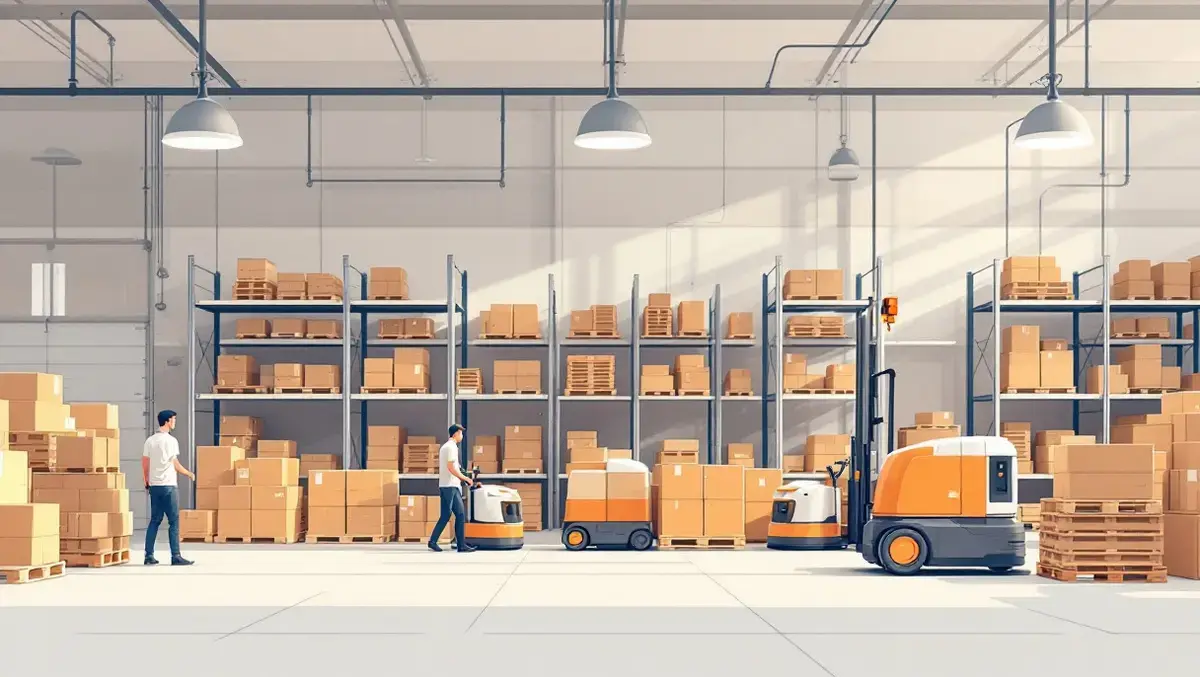
Automation now viable for smaller Australian warehouses
Wed, 23rd Sep 2026 (Today)
Prological has published research indicating warehouse automation is now viable for smaller Australian businesses, with lower equipment and software costs driving the shift.
According to the supply chain consultancy, automated systems can now add value in warehouses as small as 1,000 square metres, a scale that would not have been commercially viable five years ago. The report argues that changes in technology, cost structures and supplier networks have widened access to tools once used mainly in large distribution centres.
That marks a shift in how smaller operators may approach warehouse investment, particularly where labour is concentrated in repetitive movement tasks rather than core handling or packing work. Prological estimates about 60% of personnel costs on a typical warehouse floor are spent moving goods between receiving and storage, and between picking and dispatch.
The report identifies that activity as the first target for companies considering a limited automation project rather than a full warehouse overhaul. Instead of large bespoke systems, businesses can now pursue single-point upgrades aimed at one workflow bottleneck.
Cost threshold
Prological estimates the tipping point for direct investment at roughly AUD $30 million in annual turnover. Below that level, using automation through a third-party logistics provider is often the more practical option.
That suggests many small and medium-sized enterprises may still avoid buying their own systems outright, even as entry costs fall. For those businesses, outsourcing to a logistics partner with existing automated infrastructure may offer a lower-risk way to test the benefits.
Peter Jones, Founder and Managing Director at Prological, said the market's economics have changed as equipment has become less differentiated at the component level.
"The barrier to entry for automation vendors has reduced dramatically. What was proprietary engineering five to seven years ago is now commodity. Increasingly, what separates one vendor from another is how well they package, sell and support a product built from parts that every competitor can also buy through the same supplier networks. We've seen a small business turn container unloading and palletising into a ninety-minute job for one person, down from four hours for four. That's a realistic starting point, and it's the kind of change that pays for itself quickly," Jones said.
Smaller systems
The findings reflect a broader shift in warehouse technology towards modular systems that can be installed around a specific task. In practical terms, companies do not always need to redesign an entire site to justify spending on automation.
That is significant for smaller warehouses, many of which operate with narrow margins, limited floor space and lower throughput than national retailers or large logistics groups. A targeted investment in unloading, palletising or internal goods movement may therefore be easier to justify than a larger transformation program.
Prological's research suggests the strongest case for adoption lies where staff spend a high proportion of their day moving stock from one point to another. Those tasks are often labour-intensive but do not necessarily add much value beyond keeping product flowing through the building.
Warehouse operators have faced persistent pressure from wage costs, labour shortages and service expectations, particularly where customers demand shorter lead times and more accurate fulfilment. Falling system costs may change the calculation for businesses that had previously dismissed automation as too expensive or too complex.
The consultancy expects supplier competition to increase as more firms focus on smaller, modular offerings instead of large custom-built installations. That could place further downward pressure on entry prices across the market.
While the research focuses on Australian small and medium-sized businesses, the findings also point to a broader change in the warehouse automation sector. Vendors that once relied on large one-off projects may now see a growing share of demand from smaller operators seeking incremental improvements rather than complete system replacements.
The shift may also affect third-party logistics groups, which could use automation as a selling point for smaller clients not ready to commit capital themselves. By spreading investment across multiple customers, those providers may be able to make systems viable at a lower individual scale than a standalone operator could achieve.
Jones said lower barriers to entry have changed the conversation for smaller firms assessing where automation fits into warehouse operations.