

Alibaba Cloud joins PyTorch Foundation as Platinum member
Thu, 28th May 2026 (Today)
Alibaba Cloud has joined the PyTorch Foundation as a Platinum member, giving it a seat on the foundation's governing board.
Operating under the Linux Foundation, the PyTorch Foundation supports the open source PyTorch software framework and a broader portfolio of artificial intelligence projects, including DeepSpeed, Ray, Safetensors and vLLM.
Alibaba Cloud plans to focus its contributions on two areas: giving developers a consistent experience across different types of hardware, and contributing engineering work drawn from its own large-scale use of PyTorch. That work includes compiler optimisation, multi-chip compatibility and stability practices based on internal and customer deployments.
The cloud division also maintains its own PyTorch distribution, which closely follows the main upstream project. It uses the framework internally across Alibaba Group and offers it to cloud customers running large artificial intelligence workloads.
Its work with PyTorch spans both training and inference on large clusters. The framework also underpins projects such as SGLang, vLLM, PAI-TurboX and TorchEasyRec for customers working on large language model training and inference, autonomous driving, embodied AI and recommendation systems.
In a statement on the membership, Alibaba Cloud described the decision as an extension of its existing use of the software across a range of computing architectures.
"We believe the future of AI is built on open, production-proven infrastructure - and PyTorch sits at the heart of that future. Joining the PyTorch Foundation is a natural step given our years of running PyTorch at scale across heterogeneous hardware on Alibaba Cloud. We look forward to working alongside the PyTorch Foundation to raise the bar for AI infrastructure and help developers build the next generation of models with confidence," said Dr. Feifei Li, Chief Technology Officer, Alibaba Cloud.
Board seats
As a Platinum member, Alibaba Cloud gets one seat on the PyTorch Foundation Governing Board. The board sets policy through the foundation's bylaws, mission and vision statements, and defines the overall scope and technical direction of its initiatives.
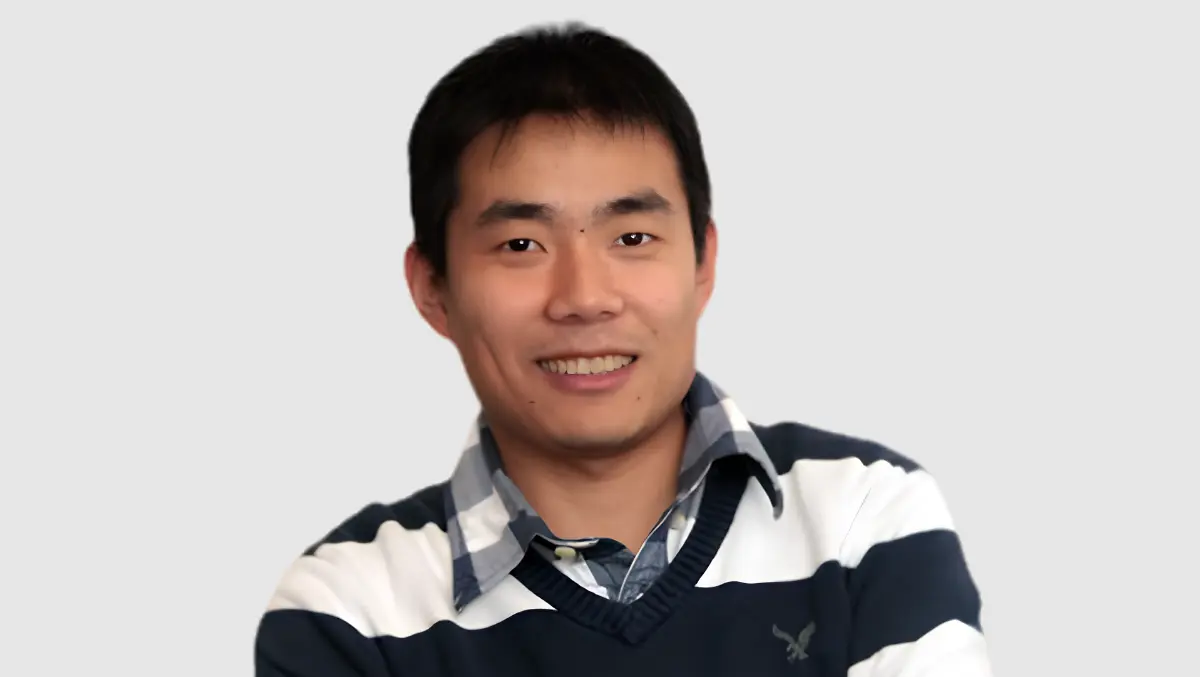
The foundation said Junhua Wang, Vice President at Alibaba Cloud, will join the governing board. Wang oversees the company's big data platform and machine learning platform, which support storage, computing, analytics and machine learning workloads inside Alibaba Group and for external customers.
Alibaba Cloud has also named Tao Ma, Principal Engineer at Alibaba Cloud, to the PyTorch Foundation's Technical Advisory Council. Ma leads work on foundational software, including operating system technologies for cloud computing, compiler technologies, and software for artificial intelligence inference and training optimisation.
Mark Collier, Executive Director of the PyTorch Foundation, said Alibaba Cloud's involvement reflects its broader role in open source artificial intelligence software.
"We are delighted to welcome Alibaba Cloud to the PyTorch Foundation as a Platinum member," said Mark Collier, Executive Director, PyTorch Foundation.
"Alibaba's recent launch of new AI accelerators for the agentic era that are powered by PyTorch and consistent support for open source will be invaluable as the PyTorch Foundation continues to grow into a multi-project home that sustains the entire AI lifecycle from training and optimization to production-grade inference," he added.
Open model push
The membership comes as Alibaba seeks a larger role in the global open source AI ecosystem through its Qwen family of large language and multimodal models. The company described Qwen as one of the more widely adopted open-weight model series since its launch in 2023, with uptake among developers both inside and outside China.
That strategy has helped place Alibaba Cloud in a competitive segment where cloud providers, chipmakers and model developers are increasingly working through open source foundations and software communities to shape standards for training, deployment and optimisation. Membership in influential open source bodies can also help companies steer technical priorities and show support for software used across rival hardware platforms.
For Alibaba Cloud, the focus on heterogeneous hardware reflects a broader industry challenge. AI developers are trying to avoid dependence on a single chip supplier, while cloud providers are under pressure to make machine learning software work reliably across a mix of accelerators, internal silicon and established graphics processing units.
PyTorch has become one of the core software layers in that effort, widely used by researchers and commercial developers to build and run machine learning models. By taking Platinum membership, Alibaba Cloud is signalling that it wants a more formal role in the governance and technical evolution of the software as demand for AI infrastructure spreads across industries.
Alibaba Cloud's board appointment will also be accompanied by representation on the Technical Advisory Council through Tao Ma, the foundation said.