

.webp)
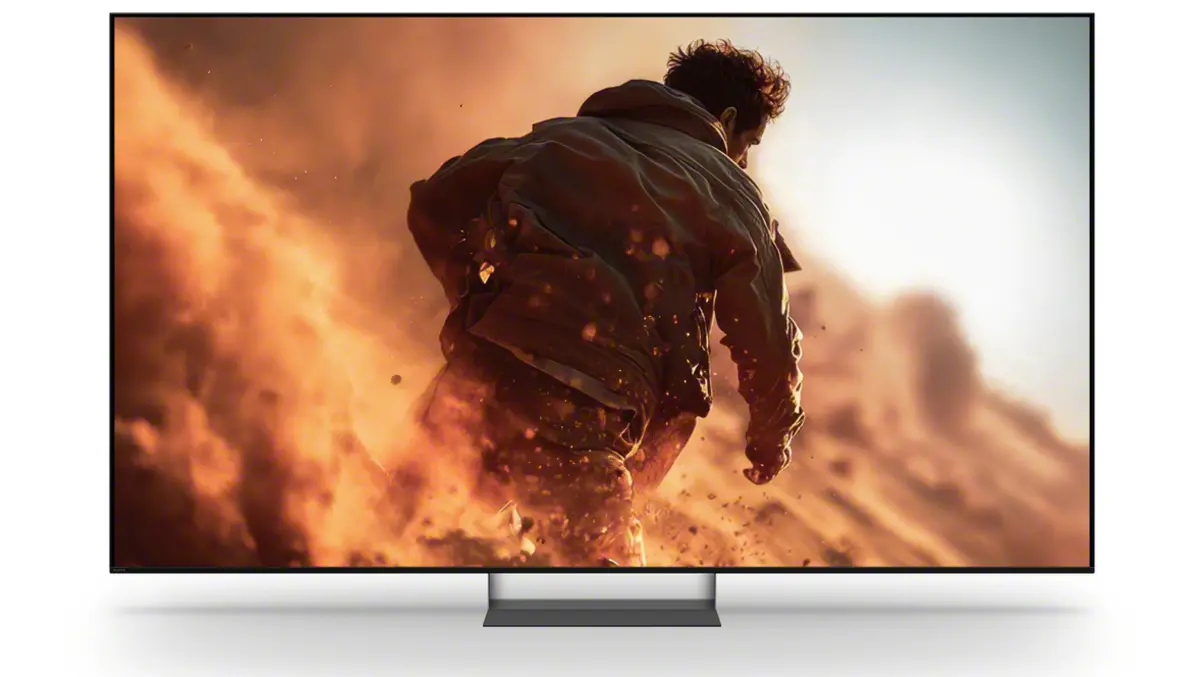
Sony has launched the BRAVIA 9 II and BRAVIA 7 II televisions and the BRAVIA Theatre Trio in Australia. They are the company's first BRAVIA models with True RGB LED technology.
The two television ranges use independently driven red, green and blue LEDs instead of a white backlight, a design intended to improve colour accuracy and brightness in bright rooms. Sony says the sets deliver the largest colour volume in its home TV line-up to date.
Both the BRAVIA 9 II and BRAVIA 7 II include RGB Backlight Master Drive Pro and RGB Triluminos Max, along with wide viewing angle support and Google TV with Gemini. The televisions are aimed at large-screen home viewing, with the BRAVIA 9 II available up to 115 inches and the BRAVIA 7 II ranging from 50 inches to 98 inches.
Audio is also central to the launch. The televisions include Acoustic Multi Audio+ and Voice Zoom 3, while the separate BRAVIA Theatre Trio is designed as a wireless three-speaker home theatre system for larger screens.
Michael Bell, Head of Home Entertainment Business Unit, Sony Australia, said the launch builds on the company's earlier work in LED display design. "Sony has been advancing LED control for over 20 years from our first independent RGB light sources in the Qualia 005 [2004] through to our flagship Backlight Master Drive premiering in 2016," Bell said.
"Our new True RGB represents a breakthrough that combines the precision of individually controlled RGB LEDs with the best aspects of both Mini LED and OLED, giving viewers purer colour, higher brightness, and picture accuracy that holds up in any room," he said.
Display focus
The BRAVIA 9 II sits at the top of the new line-up and adds several display features beyond the shared platform. These include newly developed LED controllers, Contrast Booster 40, Luminance Booster Pro and a glare-free, low-reflection screen treatment called Immersive Black Screen Pro.
Sony Pictures Entertainment took part in evaluating the surface film used on the flagship model. The aim was to preserve intended picture quality under different home lighting conditions, especially in scenes with dark detail.
Shared cinema-oriented settings across both ranges include My Cinema, Ambient Optimisation and Studio Calibrated modes for services including Netflix, Prime Video and Sony Pictures Core. The televisions also support Dolby Vision, Dolby Atmos, DTS:X and IMAX Enhanced.
The hardware design includes what Sony calls a Mirage Stand, which conceals cables behind the set. Sony says the stand is intended to simplify installation and reduce visible clutter around larger screens.
Sound strategy
The BRAVIA Theatre Trio expands Sony's push into integrated home cinema packages rather than stand-alone televisions. The system uses a three-speaker arrangement covering front left, front right and centre channels, and is positioned as a compact alternative for buyers who want a wider soundstage without a more complex speaker layout.
It was developed with input from Sony Pictures Entertainment sound professionals. The system uses 360 Spatial Sound Mapping, which Sony says can create up to 24 phantom speakers to simulate a wider audio field around the room.
The product also includes a USB Type-C microphone for room calibration, intended to improve measurement accuracy when tuning the system to a listening space.
Tony Lamberti, Academy Award-nominated sound mixer, commented on the audio system. "Sound design is integral to the cinematic experience and often drives the visceral impact of a scene," Lamberti said.
"The spatiality of the BRAVIA Theatre Trio is exceptional; it fully envelops you in sound and delivers a truly immersive, cinematic experience in the home," he said.
Andrew DeCristofaro, Sound Designer at Sony Pictures Entertainment, also commented on the product. "When we design sound for film, every choice is about guiding what the audience feels in a moment," DeCristofaro said.
"The BRAVIA Theatre Trio brings that same intention into the home, letting people hear the detail, movement and balance the way we meant it to be experienced," he said.
Pricing and materials
In Australia, the BRAVIA 9 II starts at AUD $5,999 for the 65-inch model and rises to AUD $44,999 for the 115-inch version. The BRAVIA 7 II starts at AUD $2,699 for the 50-inch set and goes up to AUD $12,999 for the 98-inch model, while the BRAVIA Theatre Trio is priced at AUD $2,999.
Sony also used the launch to highlight environmental and accessibility measures in the new range. The televisions use recycled materials in the body, internal parts and remote control, including the company's SORPLAS material, while the BRAVIA 9 II is the first Sony television to use renewable plastic made from used cooking oil and other renewable feedstocks in parts including the rear cover and some internal optical components.
Across the line-up, Sony says power use is reduced through RGB LED control. It has also introduced a revised remote control with tactile changes and a design intended to work better with narration-led accessibility features.
The launch underscores Sony's focus on premium large-screen televisions and companion audio products at a time when manufacturers are trying to distinguish their offerings through display technology, room adaptability and closer alignment between picture and sound.