

Australia data centre growth shifts towards renewable power
Thu, 23rd Apr 2026
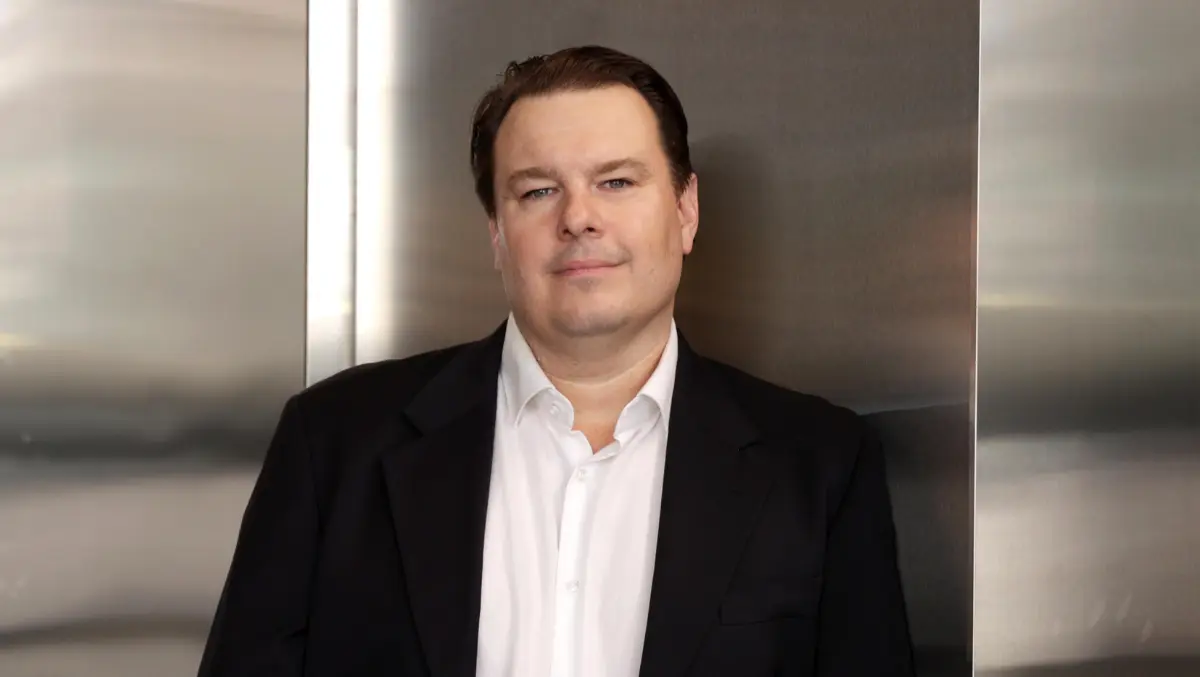
WinDC is developing modular data centres designed to operate at wind and solar farms. Founder and chief executive Andrew Sjoquist argues that Australia's main constraint on new AI infrastructure is now electricity, rather than chips or capital.
He says renewable energy curtailment in the National Electricity Market highlights a gap between where power is generated and where data centre demand is concentrated.
Sjoquist, who has worked in Australia's renewable energy sector for more than a decade, says the grid is spilling power even as demand for compute rises. In his view, that mismatch is beginning to reshape assumptions about where facilities should be built, particularly for AI training and other workloads that do not need to be close to end users.
His core argument is that the industry has focused heavily on what happens inside the data centre, including rack density, cooling and power usage effectiveness, while paying less attention to the wider energy system. That approach made sense when electricity could be treated as an input that would arrive where needed, he says, but is less suited to a market facing transmission bottlenecks and long connection timelines.
Australia is not short of electricity in aggregate, according to Sjoquist, but access to it is uneven. Citing market data, he says 7.2 terawatt-hours of renewable energy was curtailed in 2025 because transmission networks could not move it to demand centres, which he describes as more than double current data centre demand.
Expected growth in data centre electricity use is also increasing pressure on the system. Sjoquist points to International Energy Agency estimates that global data centre electricity consumption will rise from about 415 TWh in 2024 to around 945 TWh by 2030, taking the sector to just under 3% of global electricity consumption.
That increase, he says, exposes a structural issue.
"Across the industry right now, everyone is trying to solve the same problem: how do we build enough infrastructure to support AI?
And depending on who you talk to, the constraint is GPUs, or capital, or approvals, or skilled labour. I spend most of my time inside the energy system, so I'll give you a different answer. It's power.
Not total megawatt-hours in a national sense - Australia isn't short of energy in aggregate. The constraint is how that energy moves through the system: where it sits, what it costs to access, and how long it takes to turn into compute.
We're already seeing that in curtailment - with more than 12% of available solar generation being spilled in parts of the NEM. So the problem isn't whether energy exists. It's whether the system can actually use it.
And you can see that clearly in the connection pipeline - with over 180 gigawatts of projects sitting at enquiry stage in the NEM and only around 20-30% progressing. The issue isn't generation. It's the system around it."
Two tiers
His proposed response is a more segmented infrastructure model. Rather than continuing to concentrate all new development in metropolitan areas, Sjoquist says the sector should distinguish between low-latency applications that need to remain near users and high-throughput AI workloads that can be placed closer to energy sources in regional areas.
That would create what he describes as a two-tier system, with metro facilities serving latency-sensitive tasks and regional sites handling training, batch processing and some forms of inference. The commercial logic differs between the two, he says: city assets are shaped by proximity, while regional assets are shaped by access to power.
He also argues that developers may need to rethink site selection. Instead of a land-led approach focused on customer concentration and planning approvals, the next phase of development is likely to be driven more by access to generation, network constraints, losses and the time required to secure usable electricity, he says.
Timing gap
Transmission lead times are central to that case. Sjoquist says new network infrastructure can take from several years to more than seven years, while AI infrastructure is increasingly deployed on much shorter commercial cycles. That gap creates a mismatch between the pace of electricity system build-out and the pace of compute investment, he says.
"And when you layer in time, the gap becomes even more obvious.
AEMO's 2025 Electricity Network Options Report categorises transmission project lead times as 3-5 years for short lead-time projects, 6-7 years for medium, and beyond seven years for long lead-time projects. Its draft 2026 ISP also talks about committed and anticipated transmission over the next six years, with actionable projects to be delivered over the next decade. That is the cadence of network infrastructure.
AI infrastructure does not move like that. The commercial window for AI is being priced in quarters, not regulatory planning periods. So what you have is not just a bottleneck, but a structural mismatch: a slow system trying to support a fast market. And in markets like that, value tends to migrate toward whoever can step around the slowest piece of the stack."
WinDC's business is built around that thesis. The company is developing portable, modular facilities intended to be deployed directly at renewable energy sites, using electricity that might otherwise be curtailed.
Sjoquist frames the broader issue as a question of economic value as well as system design. Australia, he argues, has a chance to align growing global demand for compute with its renewable energy footprint, rather than placing more strain on already constrained metropolitan grids.
"The first wave of data centres was built around people.
The next wave will be built around power.
And the real strategic question for Australia is whether we want to remain a place that exports raw energy advantage and imports the higher-value digital layer built on top of it - or whether we want to capture more of that value here.
Because once you see the market through that lens, grid crisis and compute opportunity are not two separate ideas.
They are the same idea, viewed from opposite ends of the wire."