

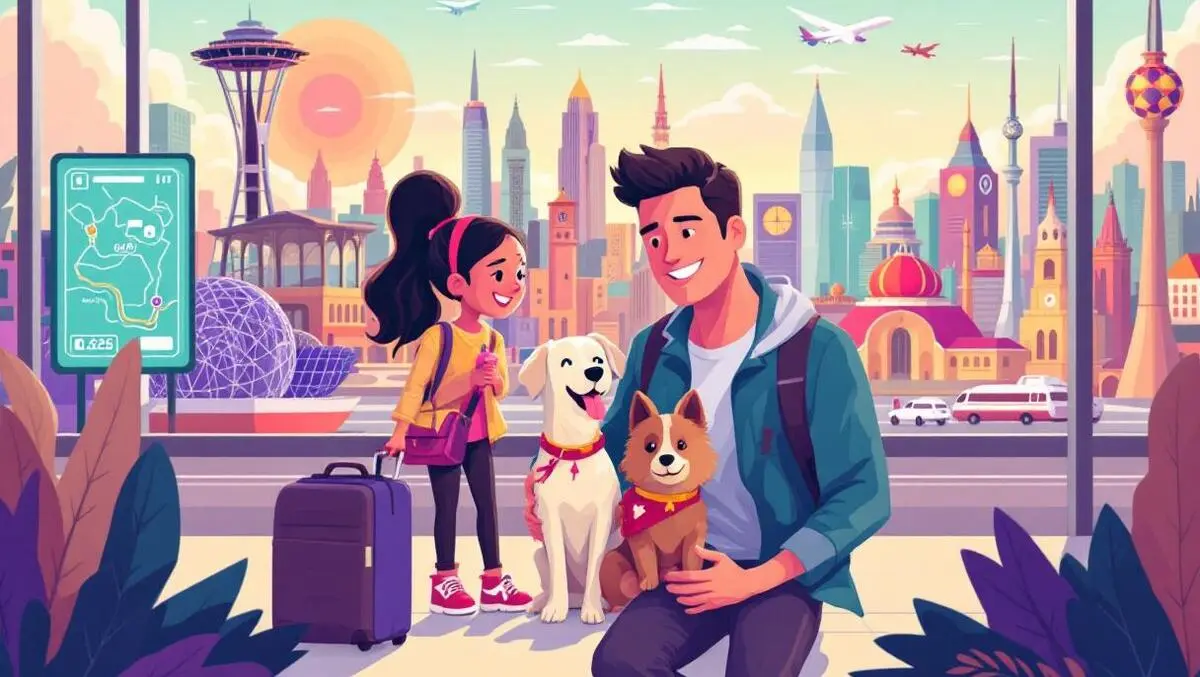

Amadeus has identified six key trends likely to shape travel in 2026, reflecting shifts in consumer preferences, technological developments, and evolving business models in the sector. Areas highlighted include pet-inclusive travel, personalised accommodation, new aircraft routes, pop culture-driven tourism, and the rise of cities centred on technological innovation.
Pawprint economy
The practice of bringing pets on holiday is rising, supported by policy changes and new commercial offerings.
Recent data from Shape Insight shows that in a survey of 2,896 UK and US travellers, 27% of pet owners took their pet on a main holiday for the first time in 2025. Operators are responding; China Railway Express is piloting pet-friendly journeys on the Beijing-Shanghai route. In Italy, the national civil aviation authority has approved larger dogs travelling in passenger cabins. Meanwhile, companies such as SkyePets are preparing to operate long-haul pet flights, and hotels including AKA Hotels have begun integrating pets into loyalty schemes. Bloomberg forecasts the global pet industry to reach USD $500 billion by 2030.
Planning methods
Travellers are using a wider range of digital platforms to plan trips, blending artificial intelligence, social media, and other online resources. Planning tools such as Google Flight Deals and Expedia's Trip Matching convert online activity into tailored flight options and itineraries. Amadeus describes a shift towards a more flexible and data-rich approach to travel planning, combining large language models for broader trends and forums for individual insights. The emphasis is on customising travel by leveraging both machine recommendations and human experiences.
Direct connections
Long-haul narrow-body aircraft are set to reduce travel times on international routes. Airbus' A321XLR, with an extended range, is leading this development. IndiGo will debut a non-stop service between India and Athens, while Air Canada will begin flights from Montréal to Mallorca. By early 2026, nearly 10% of Iberia's flights between Madrid and the Americas will use these aircraft. Qantas is progressing with Project Sunrise, offering non-stop Sydney-London and Sydney-New York flights up to four hours shorter than older routes. This new generation of direct services is expected to open access to more secondary cities and reduce transit times for long-distance travellers.
Cultural drivers
Pop culture is increasingly influencing destination decisions. Notable examples include the popularity of visiting Bath, buoyed by the Netflix series Bridgerton, which is expected to add GBP £5 million to the local economy annually. The Seoul Tourism Organisation has tailored experiences tied to the KPop Demon Hunters film, while Comic-Con-related travel to San Diego has seen a 9% year-on-year increase in international flight searches. Construction of Universal Studios Great Britain will begin in 2026, aiming to draw tourism from various fan-based communities. Amadeus and destination marketers see IP-led experiences driving fans to participate directly in themed activities, which in turn attract further commercial investment.
Hotel personalisation
Hotels are investing in technologies that enable higher levels of personalisation for guests, allowing selection of specific room features such as Pilates equipment, blackout blinds, or virtual reality gaming setups. Advances in central reservation software, like Amadeus' iHotelier booking engine, are enabling accommodation providers to better differentiate rooms beyond standard categories. This shift towards customisable stays is expected to become standard as AI-driven systems allow guests to specify their preferences at the time of booking.
Innovation destinations
Cities recognised for technology and infrastructure advances are attracting a new category of tourist interested in experiencing the latest developments in urban transport, robotics, and automation. Shenzhen is among those seeing a rise in demand, with Amadeus reporting a 48% year-on-year increase in flight searches for the first half of 2026. Anticipated launches of autonomous taxis in London and an expansion of driverless vehicles across the USA reflect this trend. Wearable translation devices and prospective inter-species communication tools are also cited as upcoming factors in redefining the travel experience.
"Across Europe, the Middle East and Africa, we are seeing travelers embrace new possibilities that redefine how journeys are experienced. From the rise of pet-friendly travel and AI-powered planning tools to the expansion of point‐to‐point routes connecting our region more directly with the world, innovation is reshaping expectations. Pop culture is inspiring new forms of tourism, while hotels are offering unprecedented personalization that reflects individual lifestyles. These trends highlight a future where travel is more inclusive, connected, and tailored than ever before, and EMEA will play a central role in leading this transformation." said Maher Koubaa, Executive Vice President, EMEA, Amadeus.