

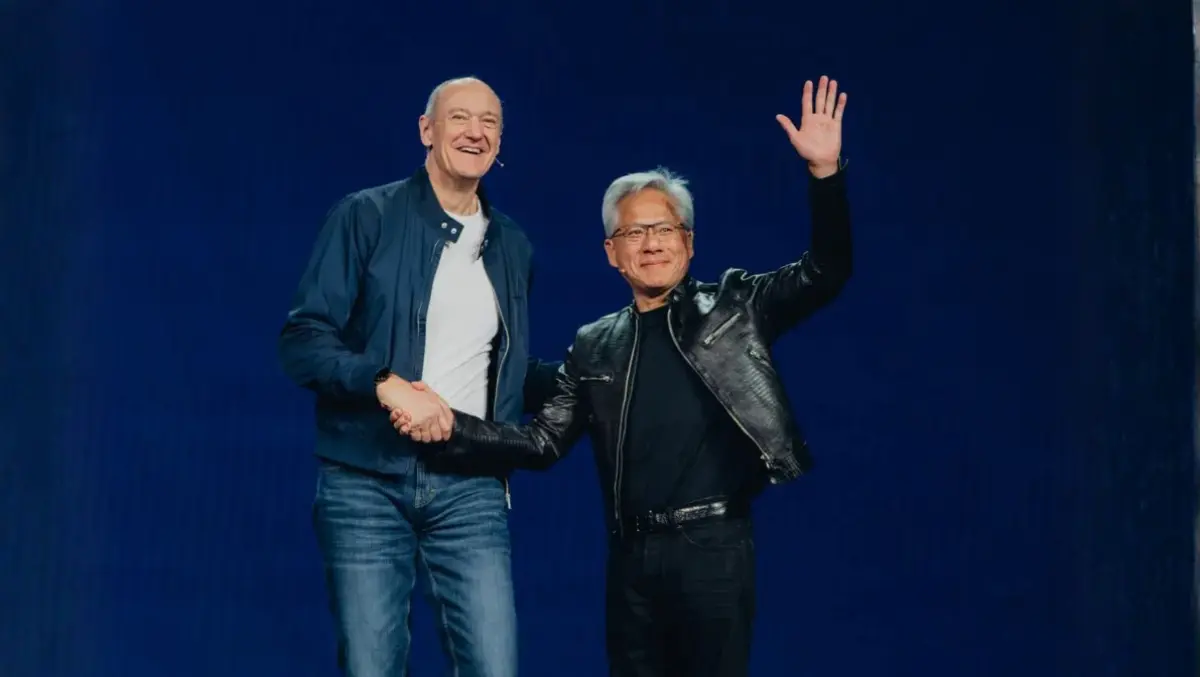
Siemens deepens Nvidia AI pact & unveils digital twin tools
Tue, 13th Jan 2026
Siemens has expanded its partnership with Nvidia and introduced new software and AI tools aimed at wider use of industrial AI across design, engineering, manufacturing and supply chains.
The announcements came as Siemens outlined a broader industrial AI strategy centred on what it calls an Industrial AI Operating System. Siemens said the work with Nvidia will cover the "entire end-to-end industrial value chain through AI" from product development through to operations and logistics.
Nvidia partnership
Siemens described the extended relationship with Nvidia as a step towards building an Industrial AI Operating System. The companies positioned the effort as spanning industrial software, AI and computing infrastructure. Siemens said the scope runs from design and engineering through manufacturing and production, then into operations and supply chains.
The company did not detail commercial terms or deployment timelines beyond its product roadmap for related software releases. Siemens framed the work as part of its approach to embedding AI into industrial workflows and digital modelling.
Digital Twin software
Siemens also launched Digital Twin Composer, a software product that it said will become available on the Siemens Xcelerator Marketplace in mid-2026. Siemens linked the product to its plans for an "industrial metaverse at scale".
Digital twin technology has become a central theme for industrial software vendors and manufacturers. Companies use virtual models of assets and production lines for scenario testing, engineering changes and operational planning. Siemens has invested heavily in digital twin tooling across product lifecycle management and factory automation over the past decade.
Siemens named PepsiCo as an early user of Digital Twin Composer. Siemens said PepsiCo is using the software to simulate upgrades to facilities in the United States and plans to scale the approach globally.
The PepsiCo reference places the new tool in a food and beverage manufacturing setting, where producers often face equipment upgrades, line reconfiguration and energy management decisions across multiple sites. Siemens did not provide additional detail on the scope of the simulations or the facilities involved.
Industrial copilots
Alongside the software launch, Siemens unveiled nine "industrial copilots". The company said the set of copilots will span the industrial value chain. Siemens did not provide a full list of the nine copilots in the material provided, or specify whether they target discrete workflows such as engineering design, maintenance, quality, or production planning.
Industrial copilots have emerged as a new category of user-facing software built around generative AI. Vendors typically position them as interfaces that can interpret natural language inputs and connect them to industrial data, documentation and workflows. Siemens has increasingly discussed the use of generative AI in industrial settings, including for engineering assistance and shop floor tasks.
Sector focus
Siemens also highlighted technologies linked to drug discovery, autonomous driving and shop floor efficiency. The company did not provide further technical or commercial detail in the information supplied, but the themes reflect areas where simulation, automation and data-driven optimisation intersect with AI tooling.
Drug discovery has become a major target for AI and simulation approaches across pharma and life sciences. Autonomous driving remains a key application area for sensor fusion, simulation environments and validation tools. Shop floor efficiency is a long-standing focus for industrial automation, with AI now positioned as a method for analysing production data, identifying anomalies and managing process changes.
Wearable AI
In a separate announcement, Siemens said it is bringing industrial AI to Meta Ray-Ban AI Glasses. Siemens did not describe the specific use cases, deployment model, or how the glasses would connect to Siemens software and industrial systems.
Wearable devices have seen intermittent adoption in industrial environments, often for remote assistance, guided work instructions and hands-free access to documentation. The addition of AI features has renewed interest in wearables as interfaces for operational information and expert support, particularly in maintenance and inspection tasks.
Siemens framed its CES presence as a marker of growing customer and partner adoption of AI in industrial contexts.
Siemens reported revenue of €78.9 billion and net income of €10.4 billion in fiscal 2025. The company employed around 318,000 people worldwide as of the end of that fiscal year.
Digital Twin Composer is scheduled to appear on the Siemens Xcelerator Marketplace in mid-2026.