

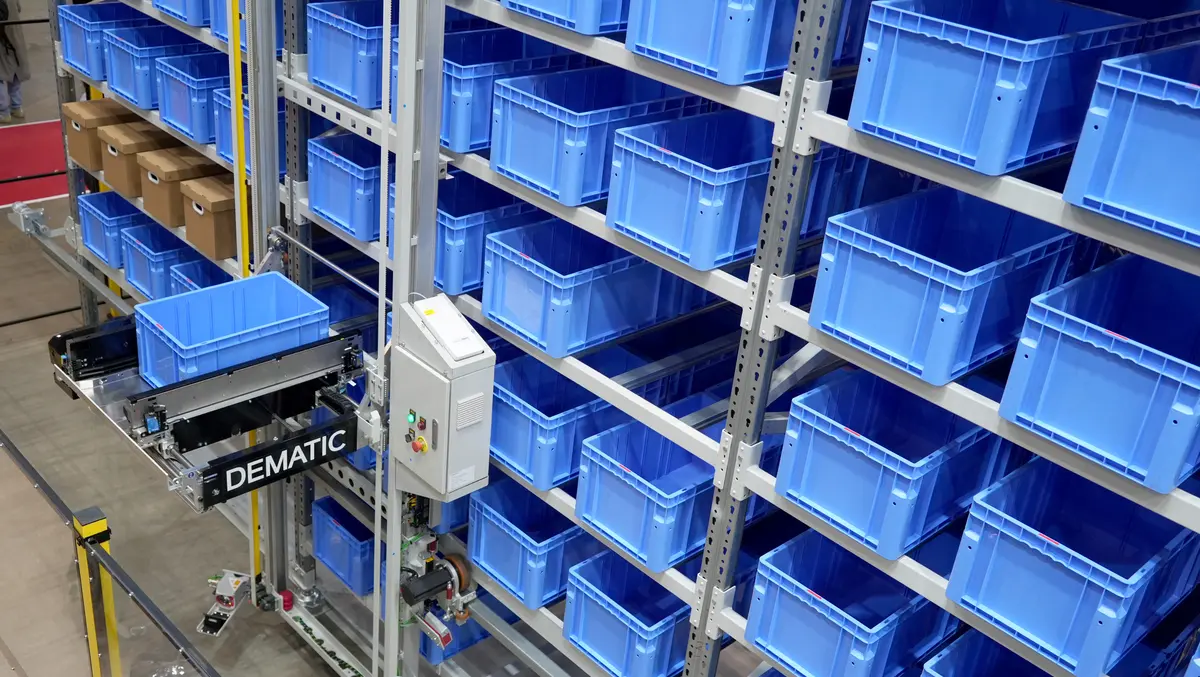
Dematic launches Multishuttle FD storage system in Australia
Wed, 29th Apr 2026
Dematic is bringing its Multishuttle FD storage system to Australia, marking the product's first appearance in the local market.
The warehouse automation supplier is targeting businesses that want denser storage without committing to large upfront automation spending. Designed for low- to medium-throughput operations, the system supports case, carton and tote storage.
It is aimed at companies dealing with tighter warehouse space and more complex inventory mixes, including those in general merchandise, apparel, spare parts, healthcare, food and beverage, wholesale, and third-party logistics.
Storage density is a central feature. According to Dematic, the Multishuttle FD can double storage density within the same footprint in facilities up to 24m high through double-deep, and potentially triple-deep, storage configurations.
That focus reflects broader pressure on warehouse operators as property costs rise and expansion becomes harder to justify. Businesses are also weighing how to automate without locking in large capital commitments before demand patterns become clearer.
David Rubie, ANZ Sales Director, Integrated Systems and Mobile Automation at Dematic, said these concerns are shaping customer decisions in Australia.
"Across Australia, businesses are under increasing pressure to do more within the same footprint, as rising industrial real estate costs make expansion less viable," Rubie said. "At the same time, many are hesitant to over-invest in automation before they fully understand uncertain future demand. The challenge is finding solutions that deliver performance today while remaining flexible enough to scale over time.
"By combining streamlined engineering with modular scalability, the Multishuttle FD System enables businesses to start with the capacity they need today and expand over time as demand evolves. This approach provides a more flexible pathway into automation, particularly for businesses looking to maximise existing warehouse space while deferring unnecessary capital expenditure."
System design
According to Dematic, the Multishuttle FD uses a rack-supported design produced locally through Colby. The setup combines shuttle and lift technology in a rail-based system integrated into the warehouse structure.
Dematic said a lightweight mast enables vertical and horizontal movement across different facility heights. It added that the infrastructure is simpler than more traditional automated storage systems, using a single power source concept intended to reduce maintenance needs and energy use.
The product also sits within Dematic's broader range of warehouse systems. It can connect with goods-to-person setups, autonomous mobile robots and software platforms used to manage inventory profiles, order volumes and fulfilment operations.
This suggests Dematic sees the product not only as a stand-alone storage installation, but also as an entry point for businesses building broader automated warehouse operations over time. Its market message emphasises phased investment rather than large, one-off spending.
Rubie said that was a deliberate part of the system's development.
"The Multishuttle FD System has been developed to remove traditional barriers to automation," he said. "It provides a right-sized entry point, allowing customers to scale in line with their business rather than over-investing upfront, while still achieving meaningful gains in storage capacity and operational efficiency."
The Australian warehouse and logistics sector has seen growing demand for systems that increase capacity inside existing buildings, particularly as operators contend with higher land and construction costs. Technologies that make greater use of vertical space have drawn attention from distributors and retailers handling broader product ranges and more uneven order flows.
Dematic's latest move positions it in this part of the market, where suppliers are competing on installation flexibility, storage density and the ability to expand systems in stages. The Multishuttle FD is presented as particularly suited to slower-moving stock, complex SKU profiles and space-constrained sites where adding more real estate is not the preferred option.
Facilities with mixed inventory needs may also be a target. By covering cases, cartons and totes, the system is intended to serve operations that need a denser storage layer without moving immediately to very high-throughput automation.
For customers weighing automation, the commercial argument rests as much on timing as on performance. Rather than requiring a full redesign of warehouse operations from the outset, systems such as this are being marketed as a way to add storage and expand in line with demand.
Dematic said the Multishuttle FD offers that staged path while increasing the number of storage locations available within existing facilities.